Crafting playful transit ecosystem that reflects game atmosphere and sparks meaningful encounters between fans
Role
Product Designer
Timeline
14 weeks
January 2025 - April 2025
Team
Athena Wu
Sunniva Long
Silvia Liang
Leveraged Skills
Product design
Visual interface design
Micro-animation motion
Branding
Overview
Reimagining a more joyful and meaningful rider experience for LA Olympics.
From research and interviews revealed the true barrier to rider adoption as a "vibe mismatch": while LA pulses with cinematic energy, the Metro remains a rigid, utilitarian hurdle for a vibrant generation of fans. To bridge this, I designed a phygital journey that transforms a solitary commute into a celebratory ritual.
As the lead designer, I owned the end-to-end development of the Olympin device and its app connectivity, focusing on "invisible hellos"—proximity-based signals and micro-animations that spark serendipitous, real-world connections between strangers.
Goal
+11%
Targeted Demographic Alignment (Gen Z)
20+
Ecosystem integration points into stations
15%
Visitor-to-rider conversion
JUMP TO PROTOTYPE
The Current Space
Only 6.8% of visitors consider LA Metro as their transportation options.
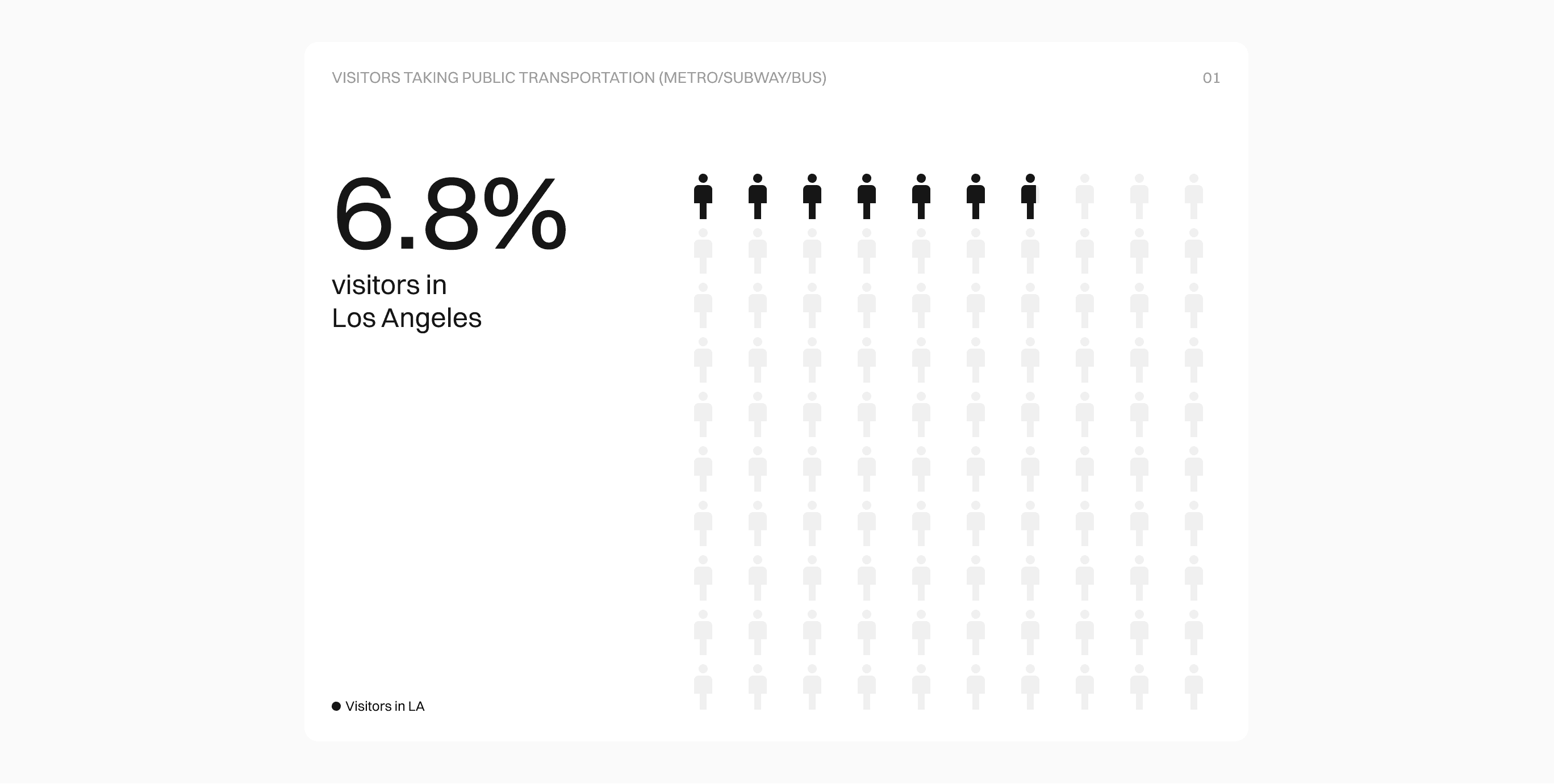
In 2028, Los Angeles will be hosting the Olympic and Paralympic Games, expected to draw roughly 12 to 15 million visitors to the region.
Many visitors prefer cheap & sustainable travels, but why not Metro?
From our field visits and research, we defined three core barriers to rider adoption...
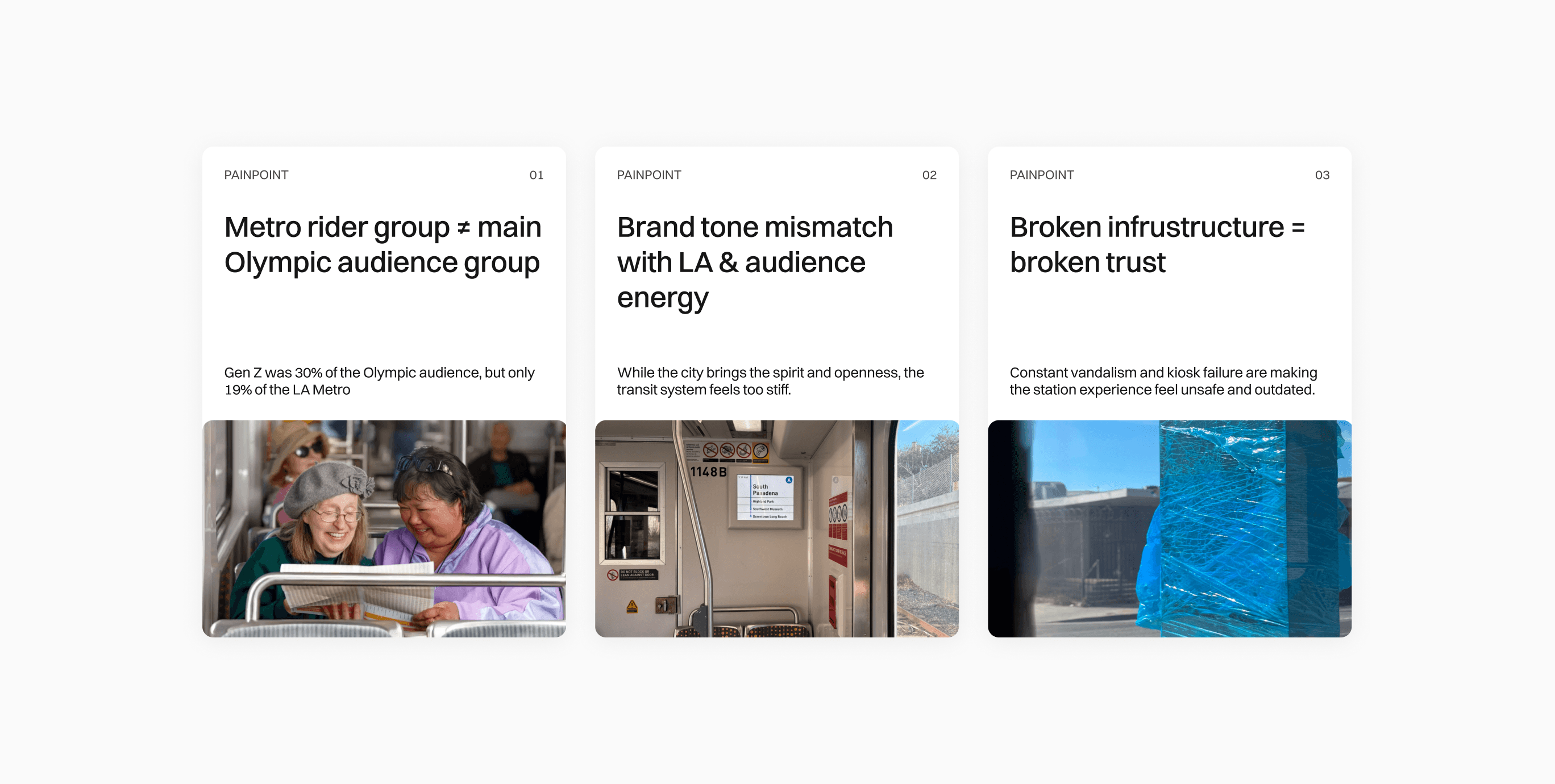
Besides the data, out of 13 interviewees of LA local and visitors, here’s why they stayed away...
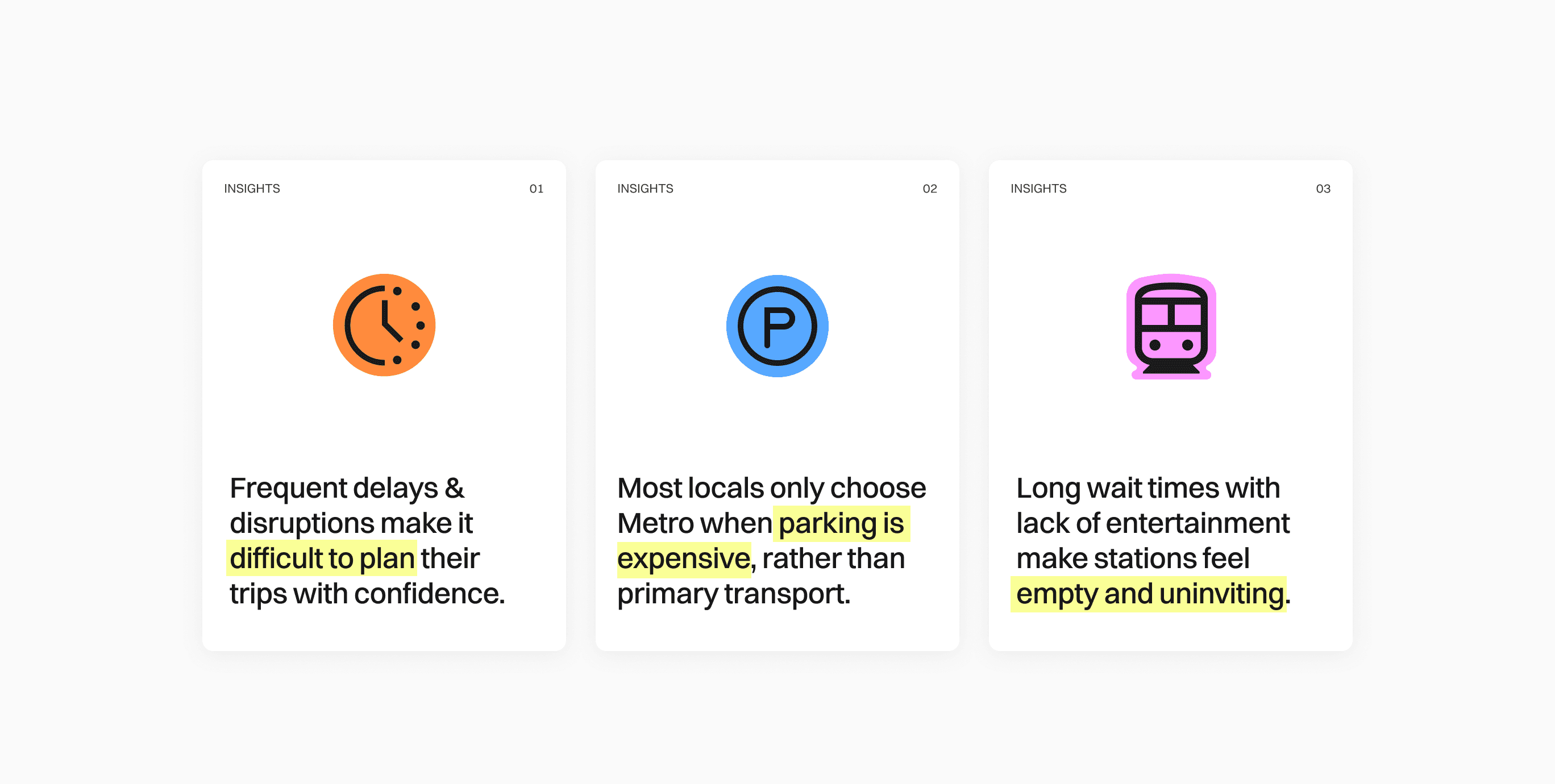
The Problem
LA Metro remains a rigid system for a vibrant generation (Gen Z)
Gen Z makes up 30% of the Olympic crowd but only 19% of current Metro riders, the stiff, boring system fails to match the city’s impression.
So What?
Make the brand vibe reflect the energetic and social side of LA so it becomes the first choice for travelers
Winning Gen Z loyalty starts with inclusive, low-friction social signals. If the Olympic journey feels like a safe, socially conscious experience rather than a solitary space, the Metro evolves from a temporary utility into a permanent part of their urban identity.
The Solution
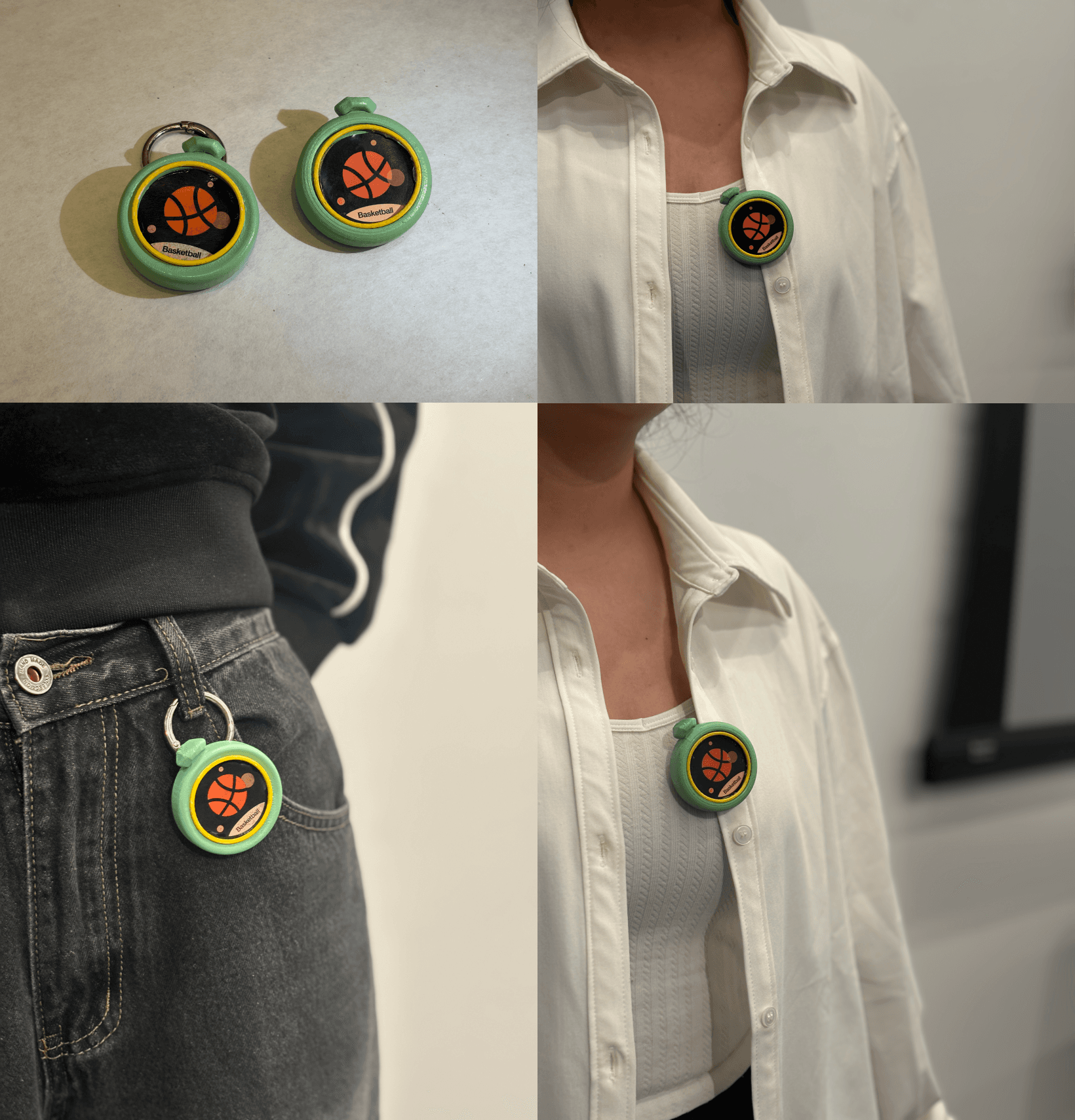
Introducing Olympin
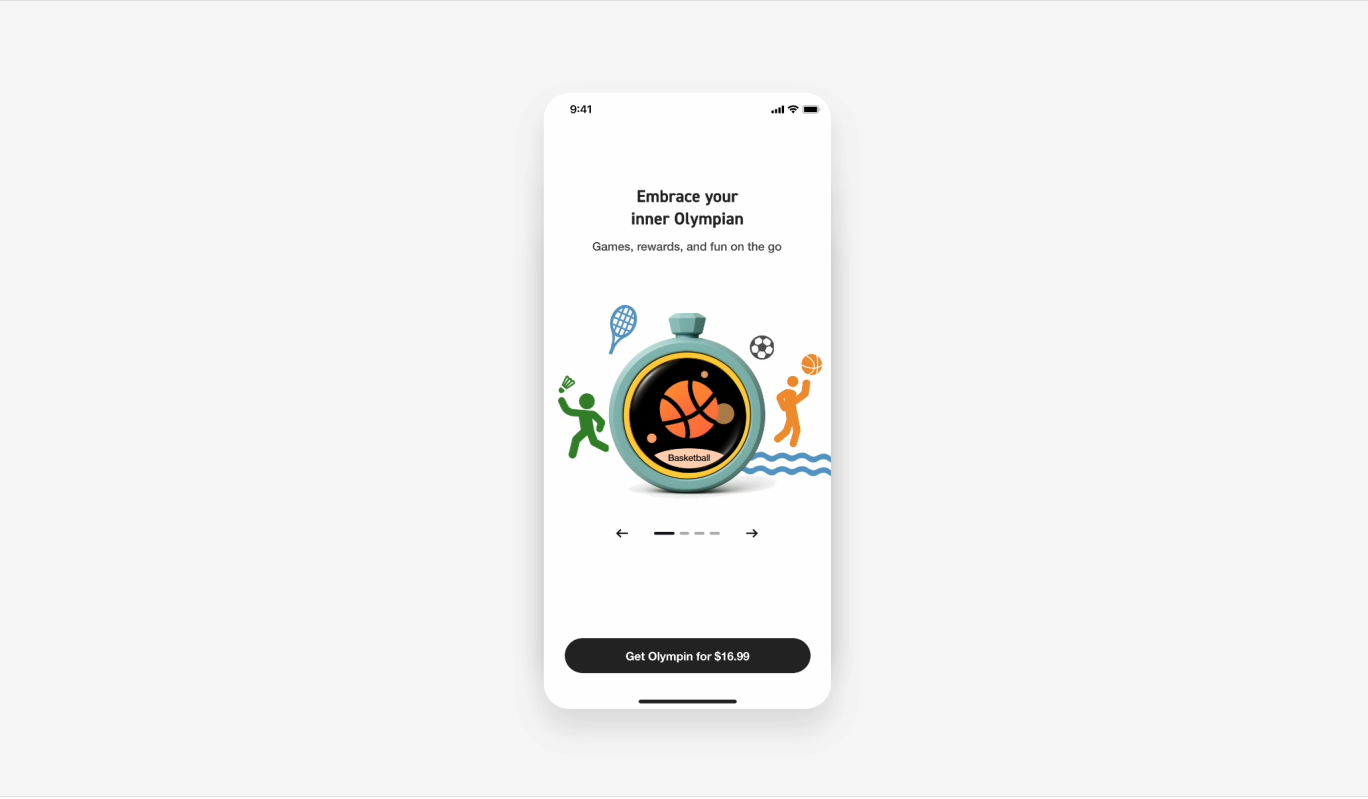
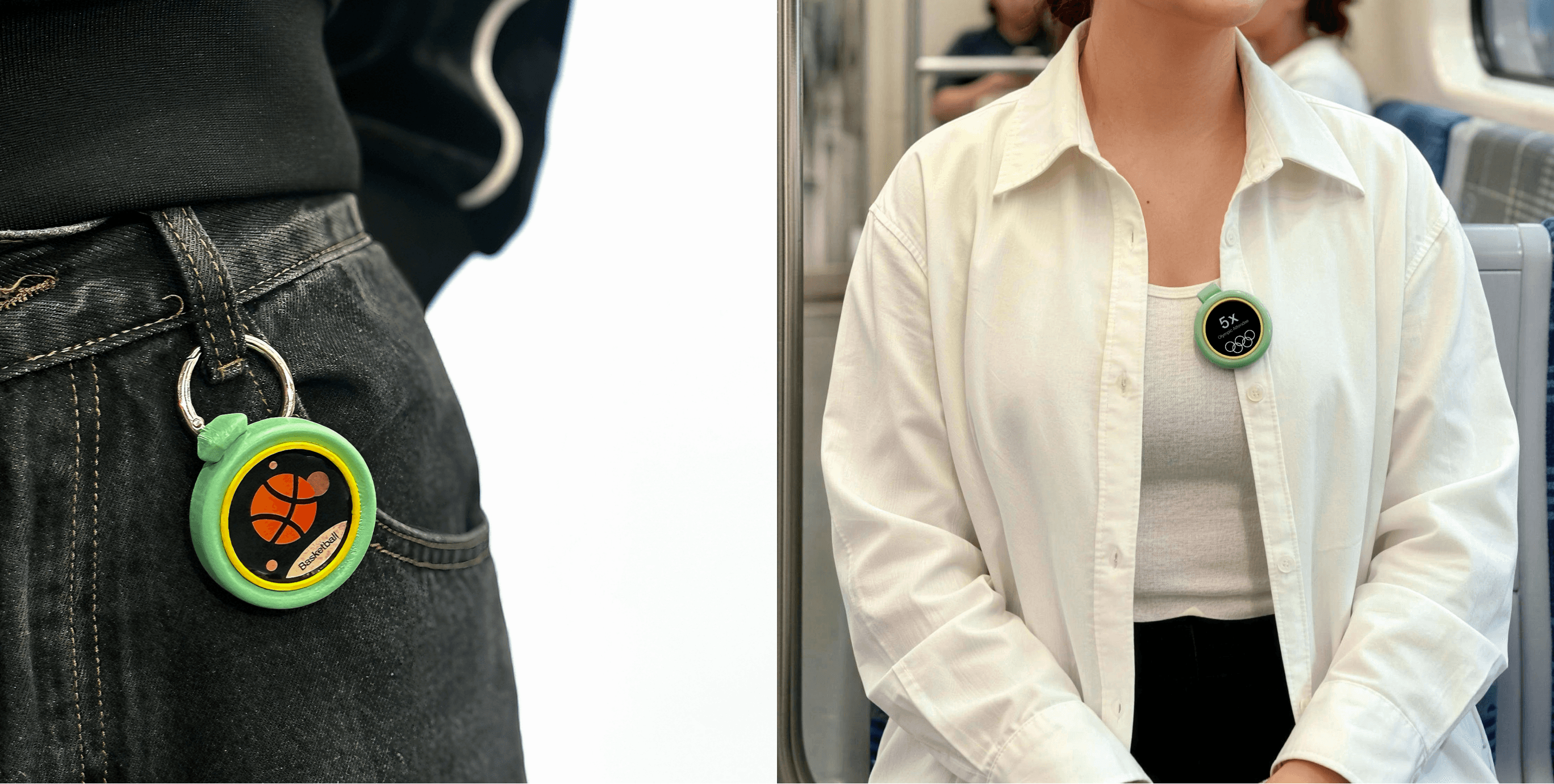
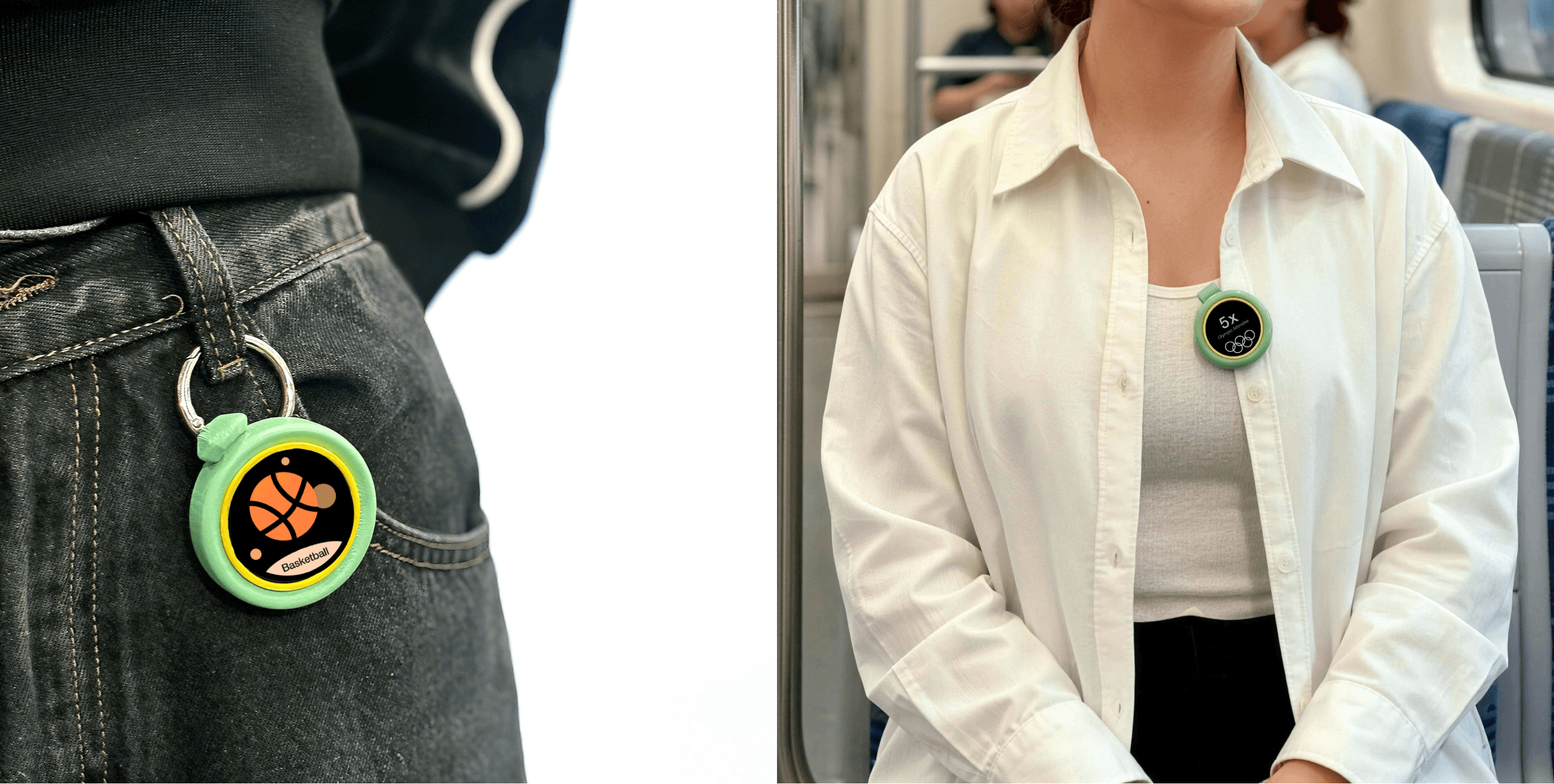
Core Flows
01 Pair Olympin
02 Set up your mood profile
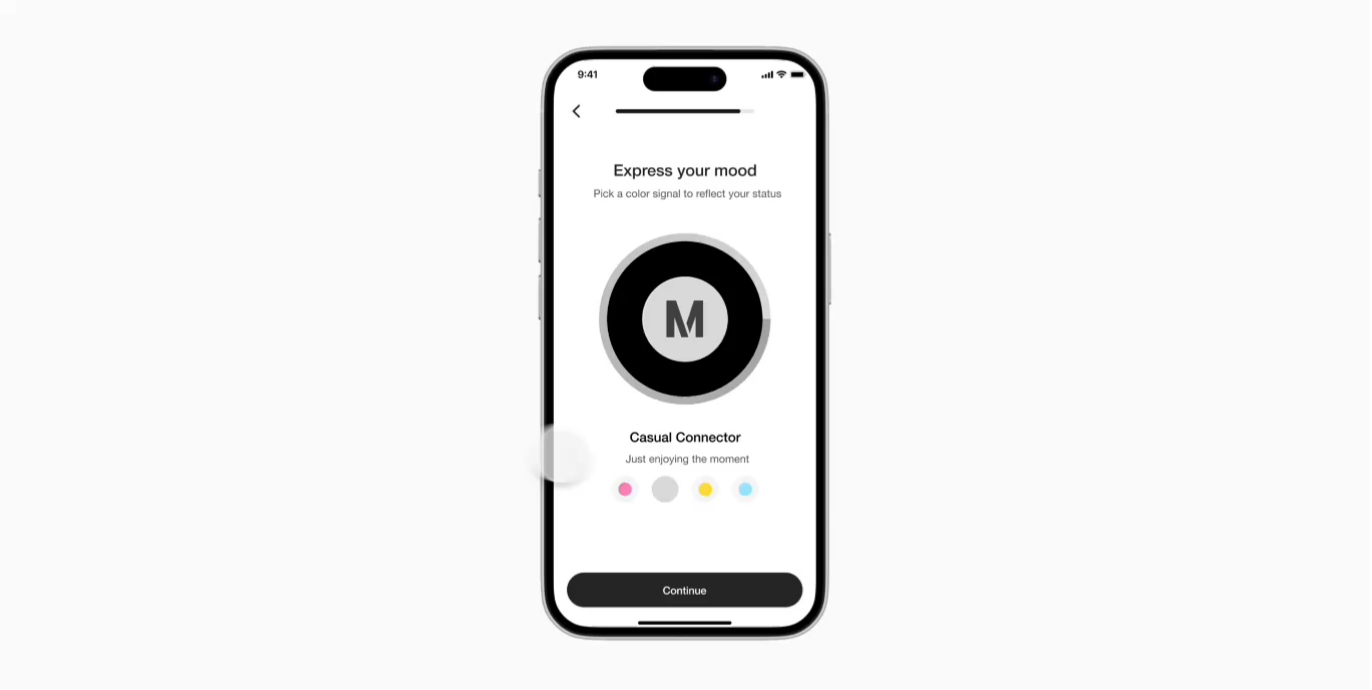
Pick a color to represent your social mood through device glow, showcase your interest in a subtle way of communication starter.
03 Cross path other Olympin users to ignite the torch
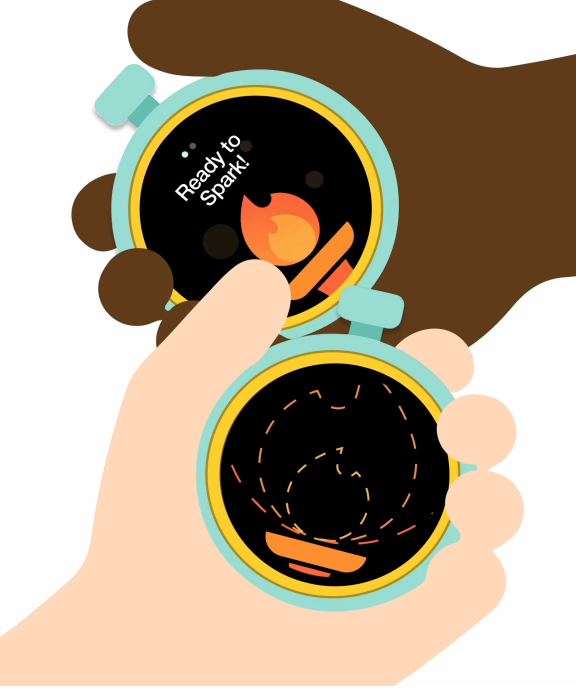
When two users cross paths, their Olympins exchange an 'invisible hello' through torch ignition. These collected sparks act as digital icebreakers and a low-pressure conversation starter.
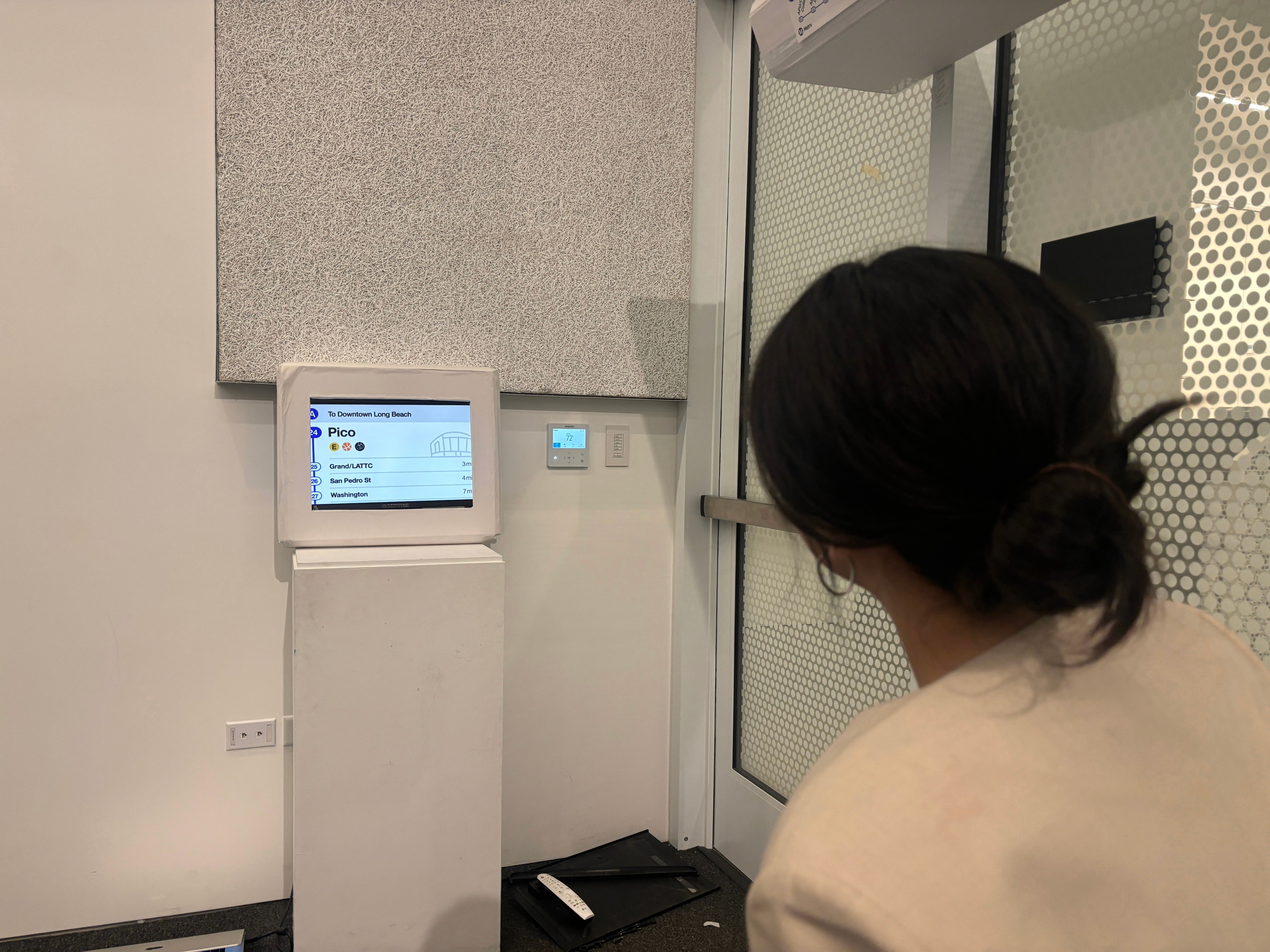
04 Turn wait time to play time at station platform
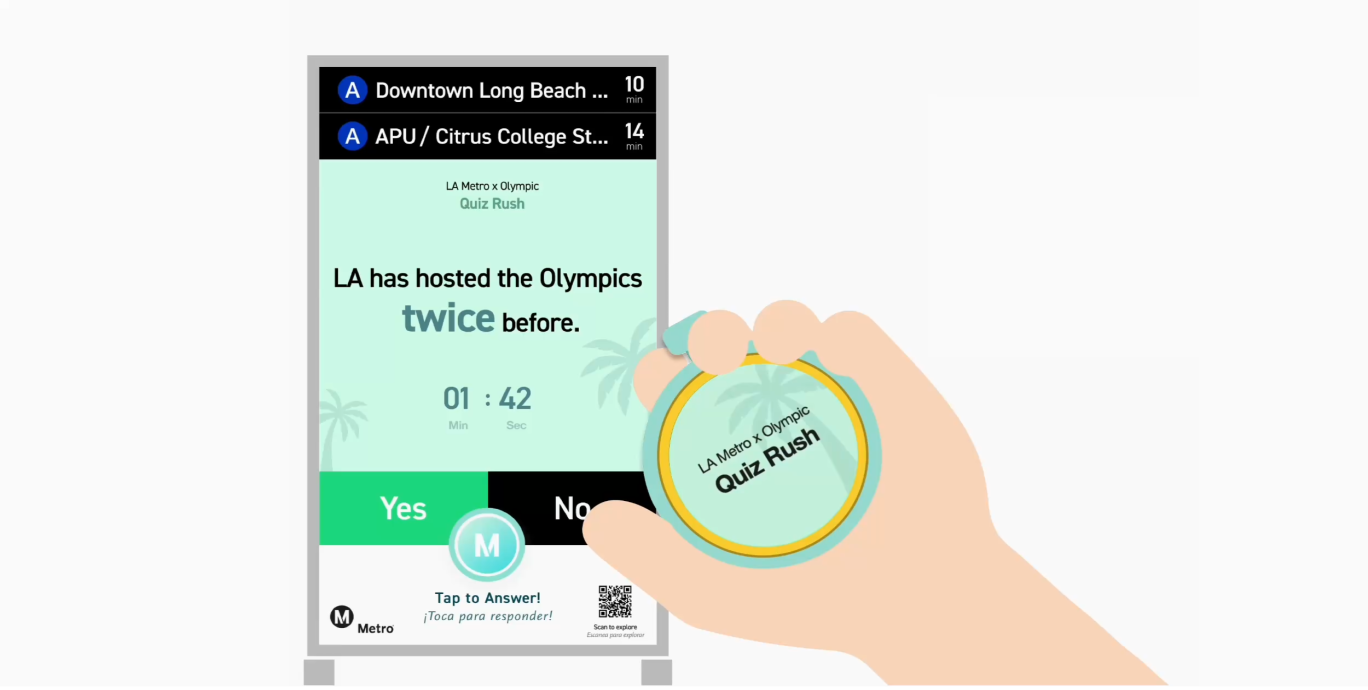
Wave your arm to rotate Olympin to the right direction to answer trivia games from digital displays. See how many you can get right before the train comes!
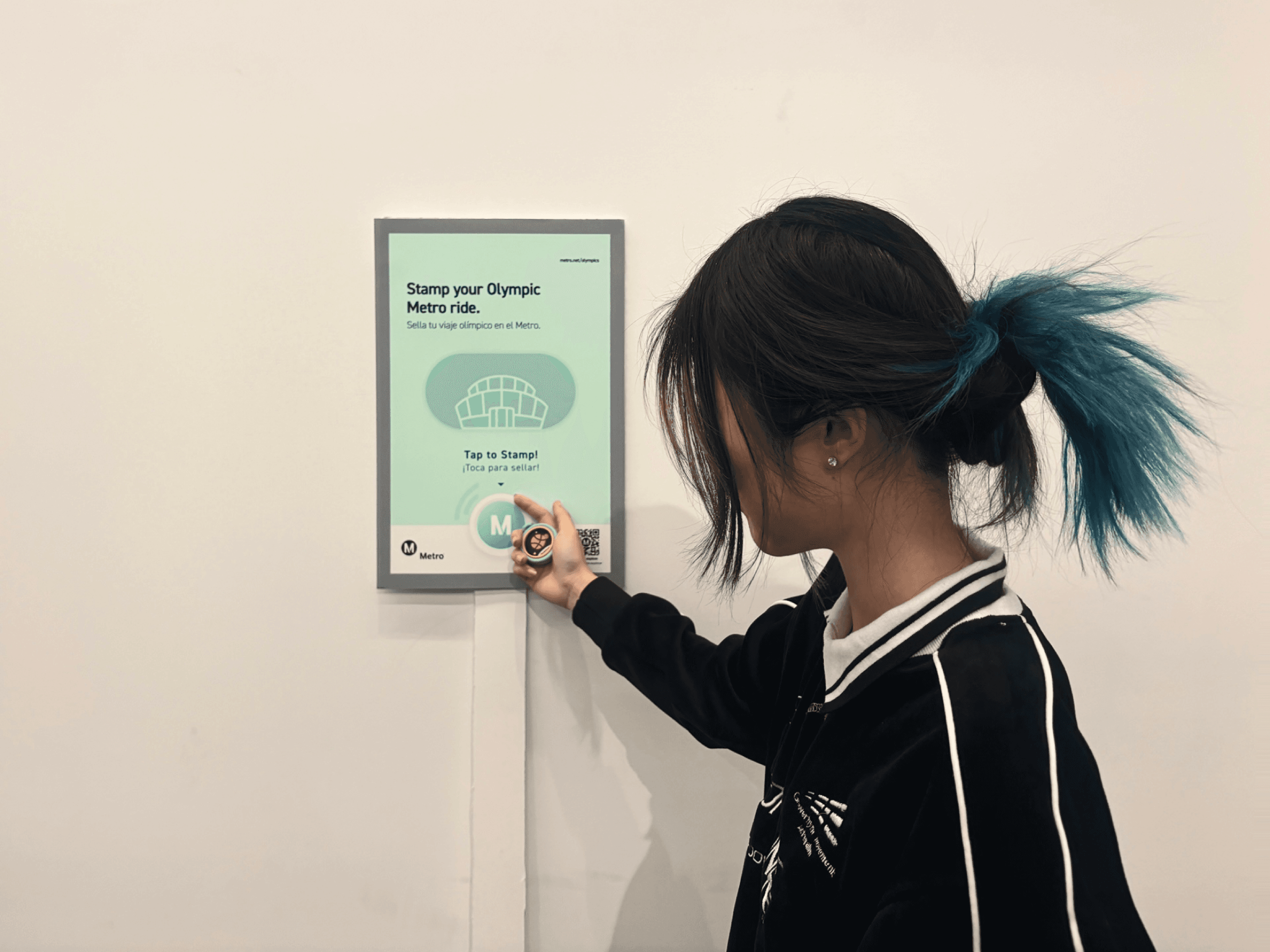
05 Stamp your Olympin before exiting Metro stations to collect digital stamps
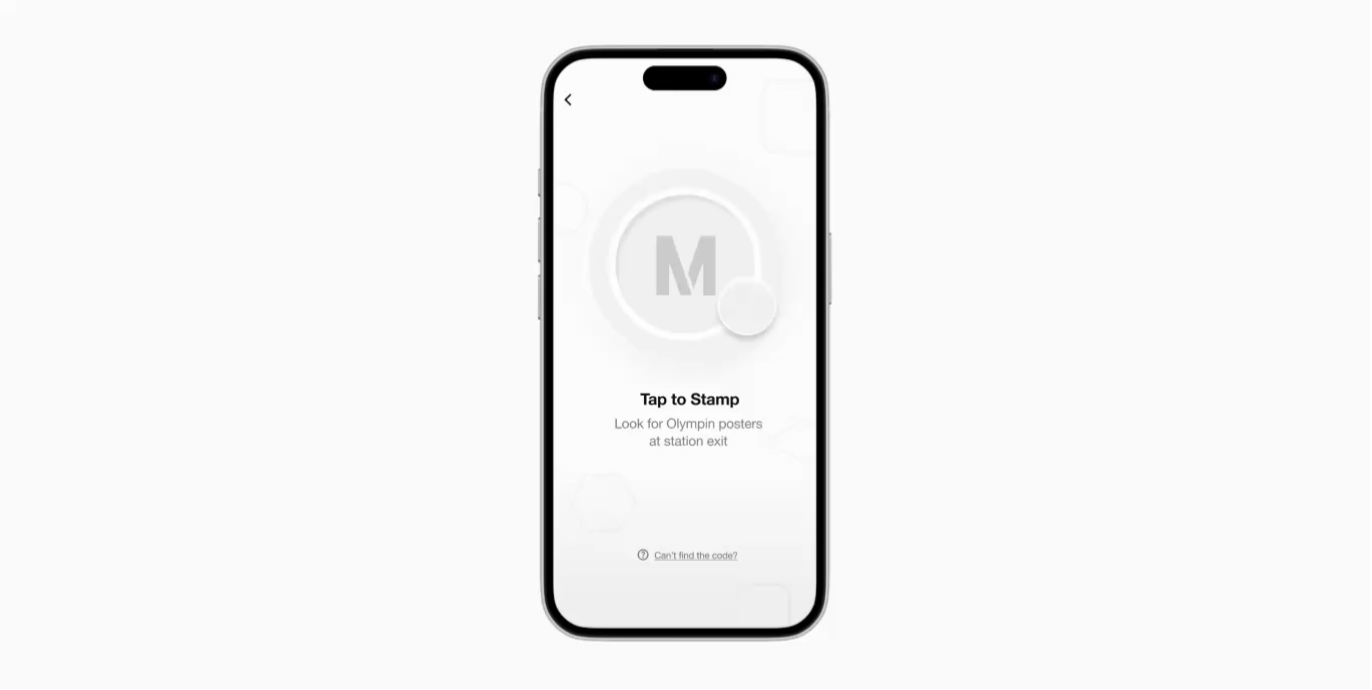
Ride the Metro and collect digital stamps at featured Metro stations, from Olympic venues to city landmarks, to trace your footprints. Mark the moment. Map your LA. Remember your Olympics.
Research
Understanding current Metro rider’s choices
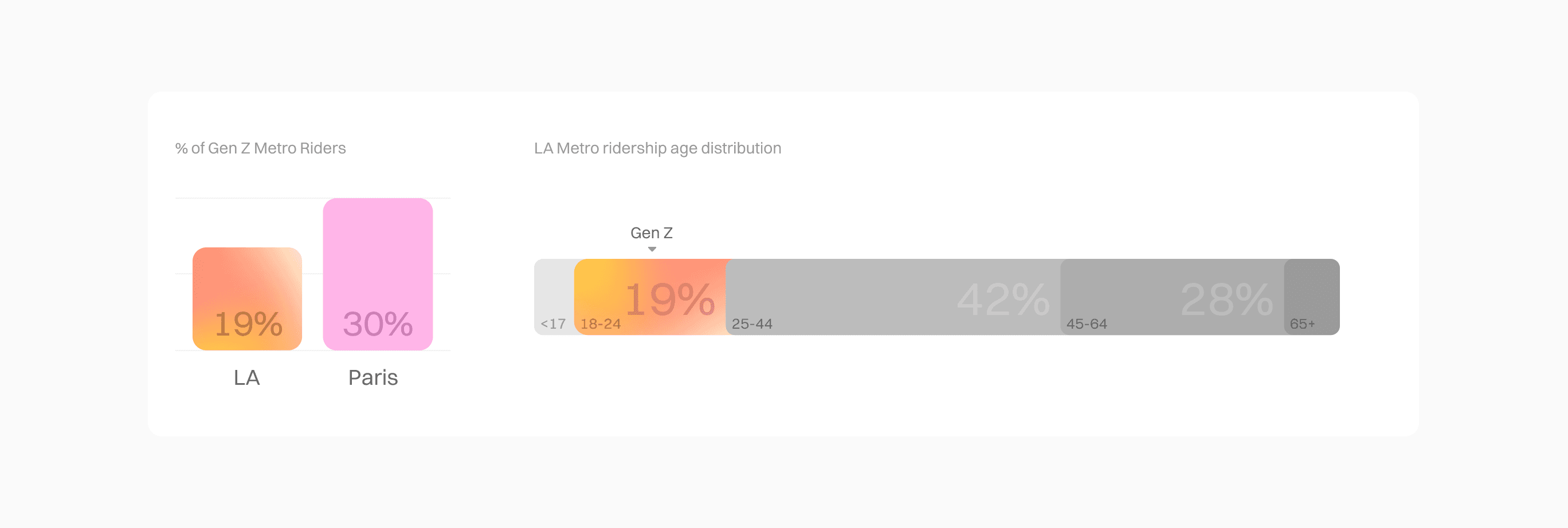
Moreover, current ridership for visitors to take Metro is extremely low at 6.8% compares to other Olympic host cities such as Paris 30%, Tokyo 80%, Beijing 52%.
competitive analysis
Benchmarking the global Olympic transit landscape.
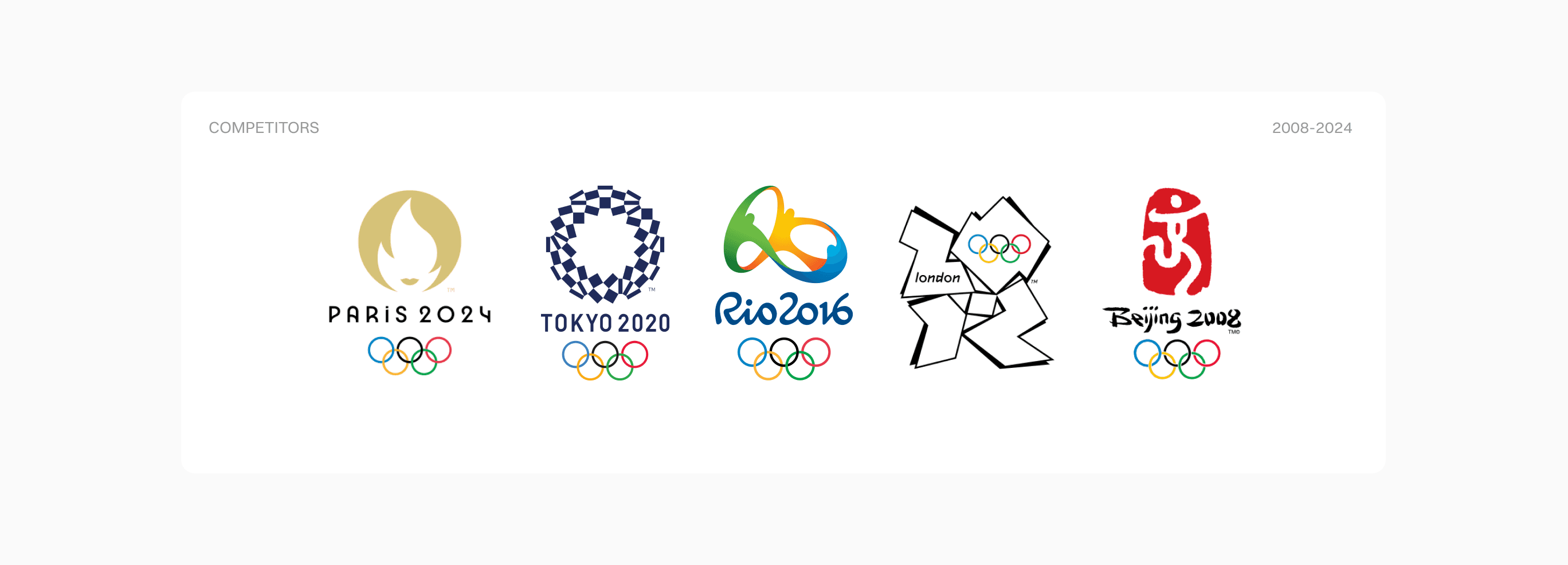
We explored transit systems in Paris, Tokyo, London, and Beijing to identify the friction points in their visitor experience. We found that while these cities achieved high ridership, there remains a massive opportunity to move beyond utilitarian efficiency and create an authentic social connection—a gap we aim to close for LA28.
Key Insight
Metro’s brand tone is mismatched with LA audiences & energy.
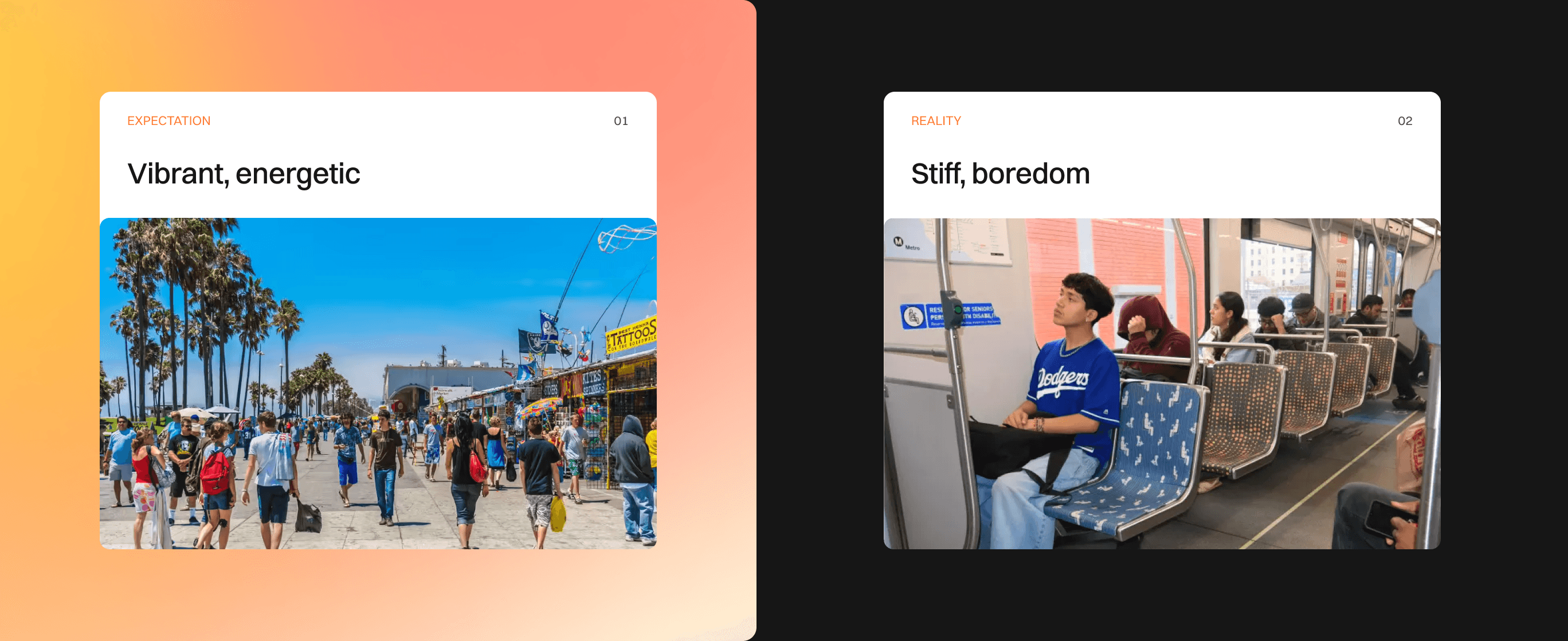
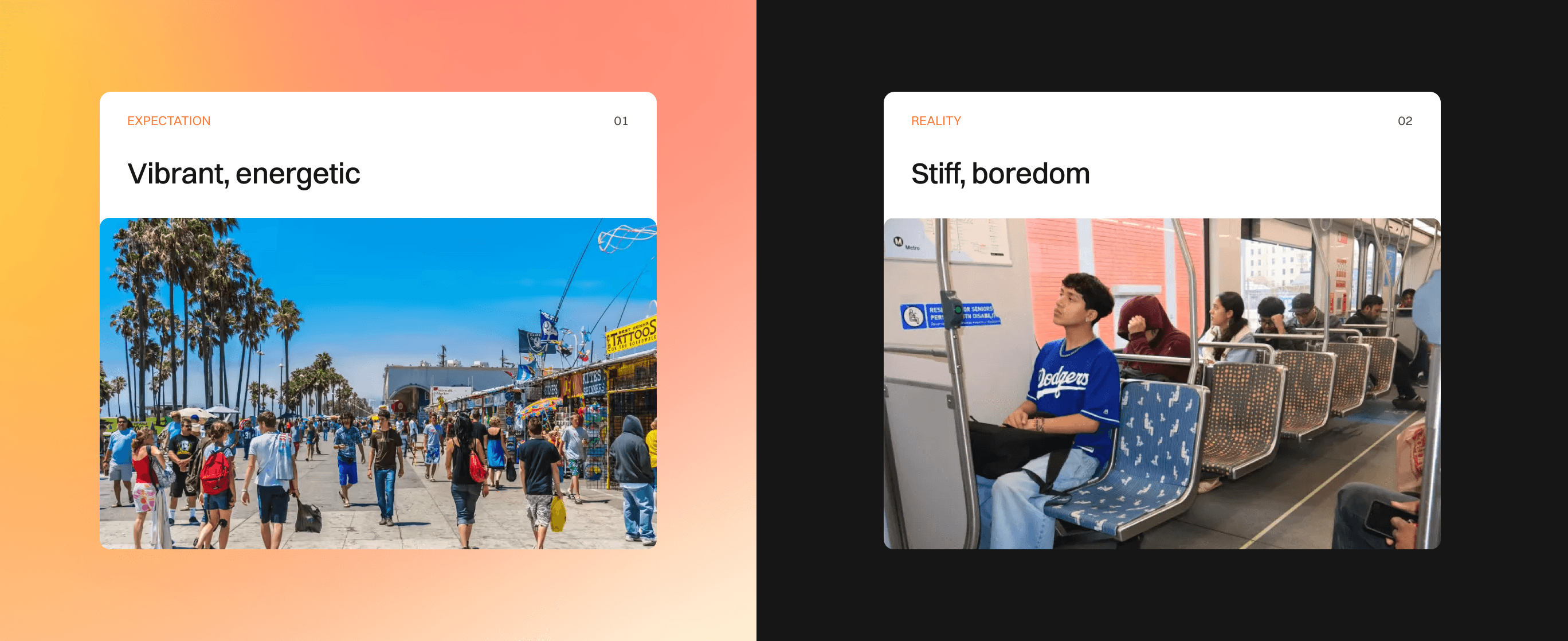
For visitors, LA is often associated with sunshine, creativity, openess, but currently Metro feels rigid, disconnected from the city’s dynamic energy.
Decoding the Gen Z Ritual
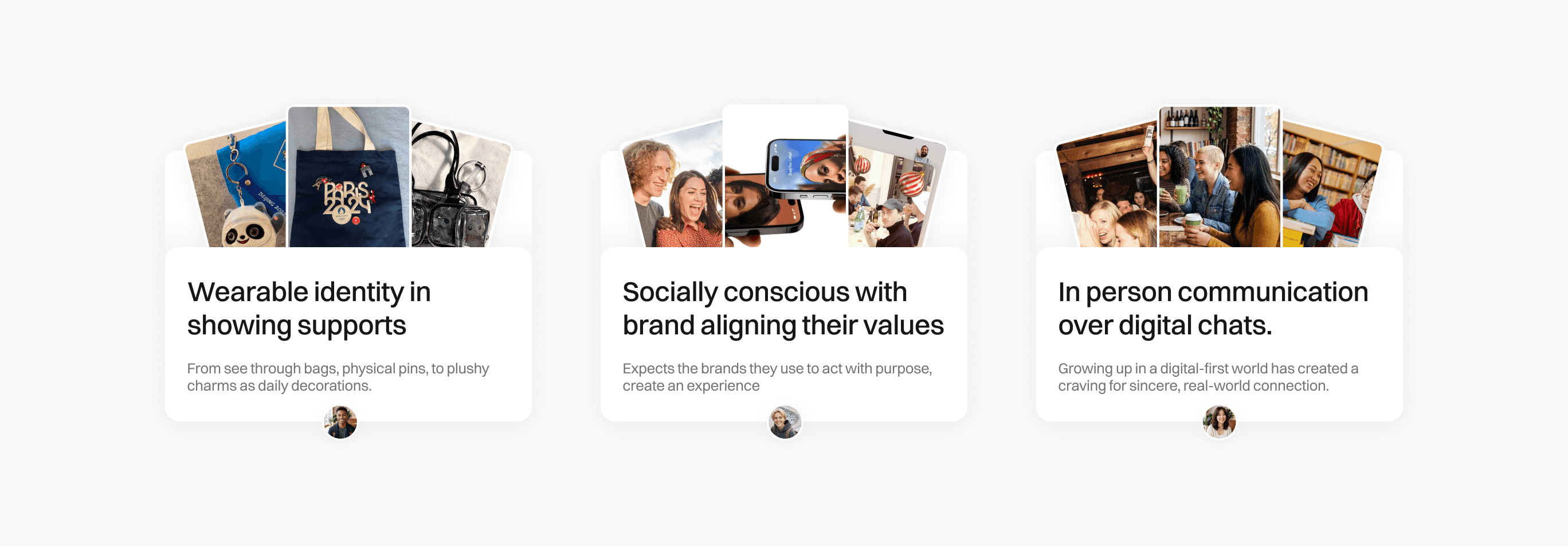
Our field observations and station audits revealed that for Gen Z, participation is a physical act. Young visitors don’t need another mediocre transit ride;
They need a sense of belonging and social soul.
Ideation
How might we enhance social engagement and sense of belonging for young people during transit rides?
I focused on lowering social barriers and blending joyful designs into the rider journey.
Olympic visitors needed to feel connected to the city's energy, not isolated by its infrastructure. This meant prioritizing real-world signaling at the surface—moving the interaction off the phone screen and onto the physical journey.
Design Goals
I want the pin interaction to be expressive of personal preferences.
I want the interfaces to be accessible and universally understood.
I want the design to feel inviting and warm.
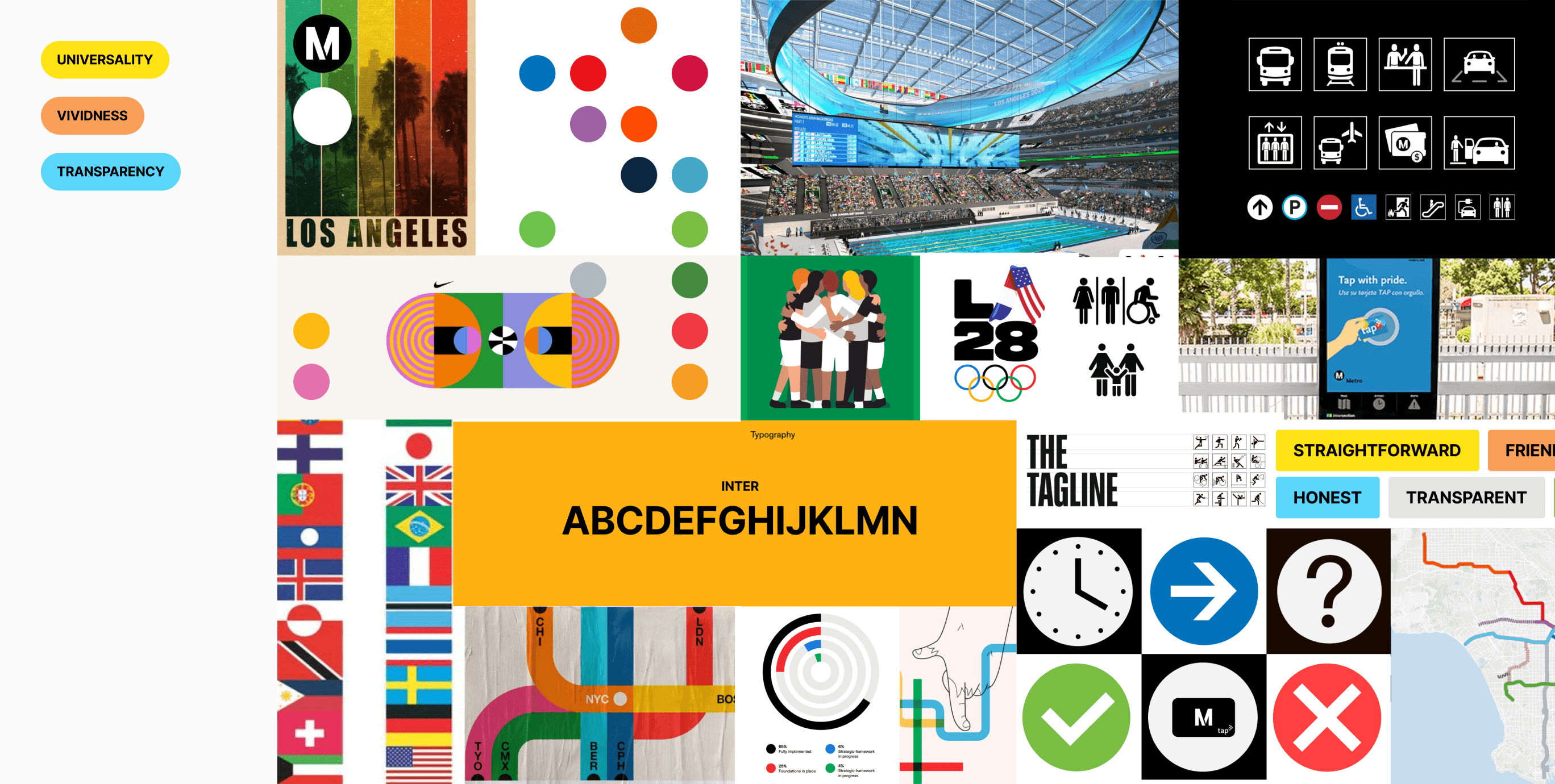
Bridging vibrant spirit of LA28 with Metro brand guidelines
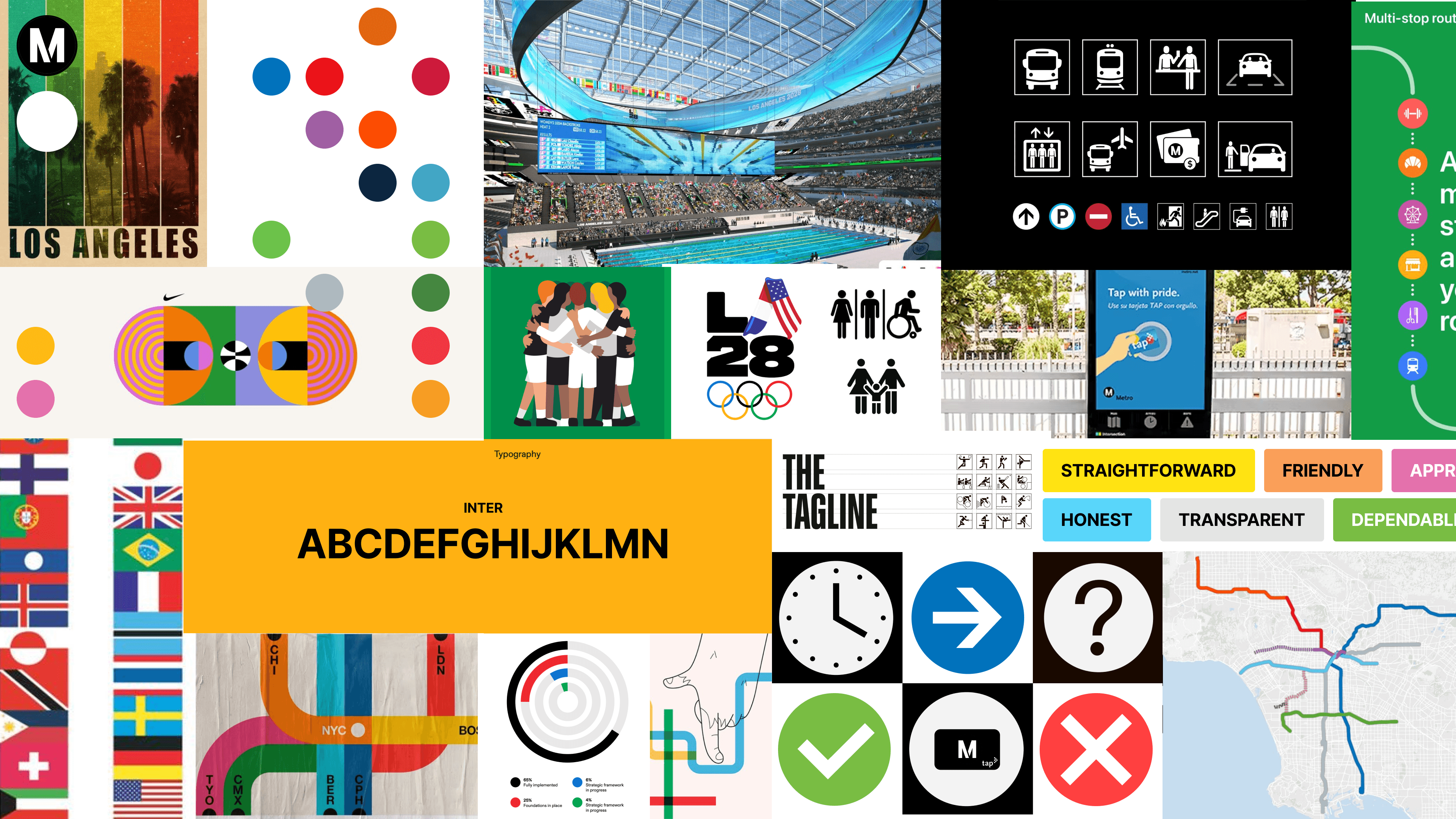
My teammate and I analyzed brand visual guidelines and mood boards to bridge the gap between LA’s "cinematic energy" and the Metro’s "rigid" reality.
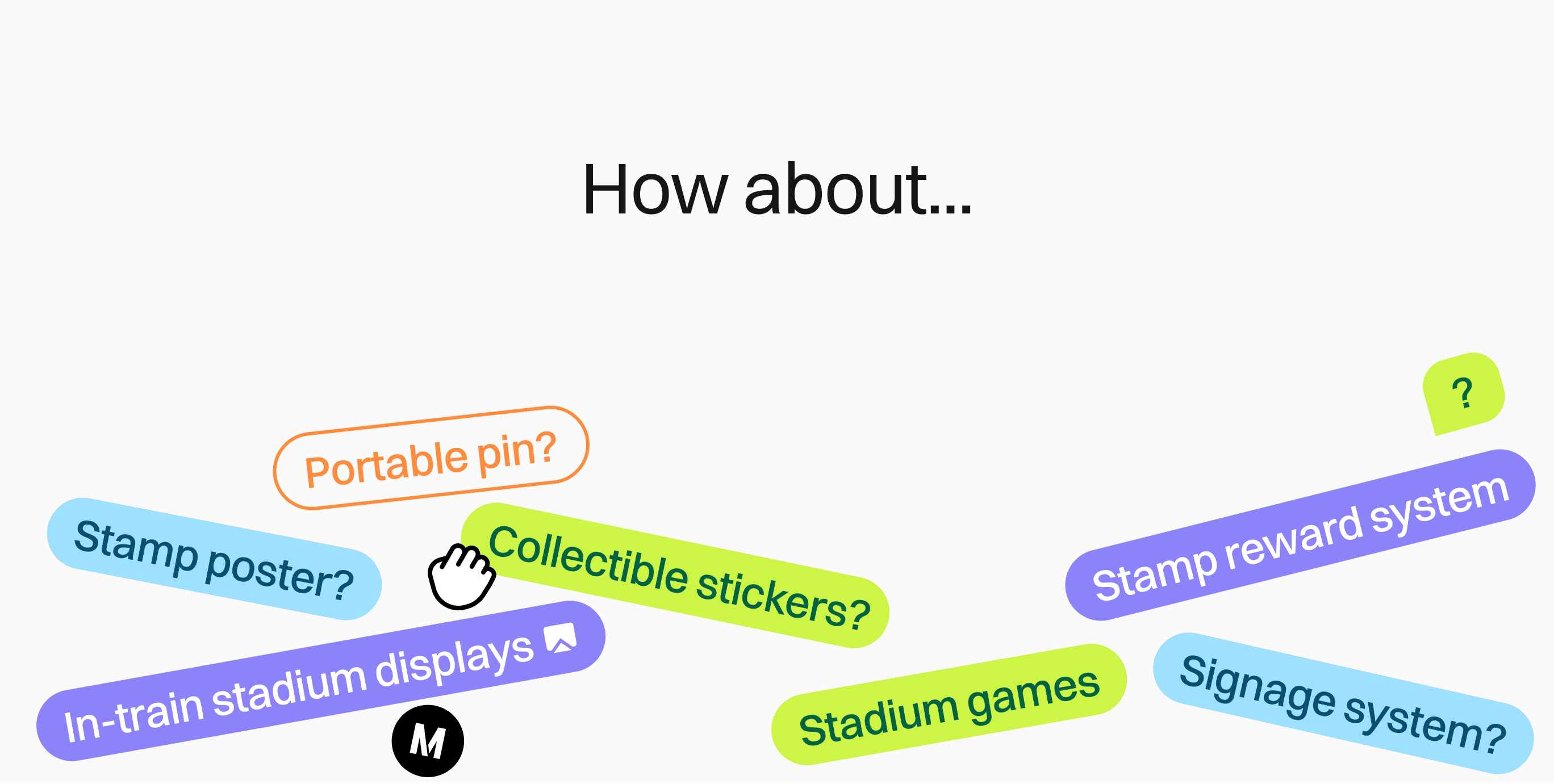
Creating conversation starter through expressive pin interfaces


Exploring interface display to support various Olympic visitor’s needs for pin displays.
Our vision goes beyond digital solution, we want things to be tangible & interactive
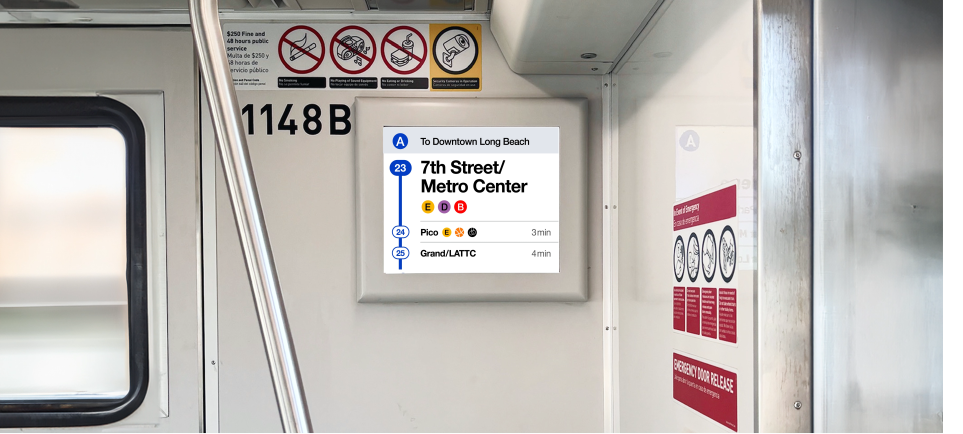
From our field studies across 20+ stations, we knew fans wanted more than just a ride; they wanted to understand where the energy was happening and how to safely bridge the gap between physical proximity and social connection. This research guided our selection of signature touchpoints to develop into a cohesive service blueprint:
Gamifying experience as easter eggs to unlock points across the city
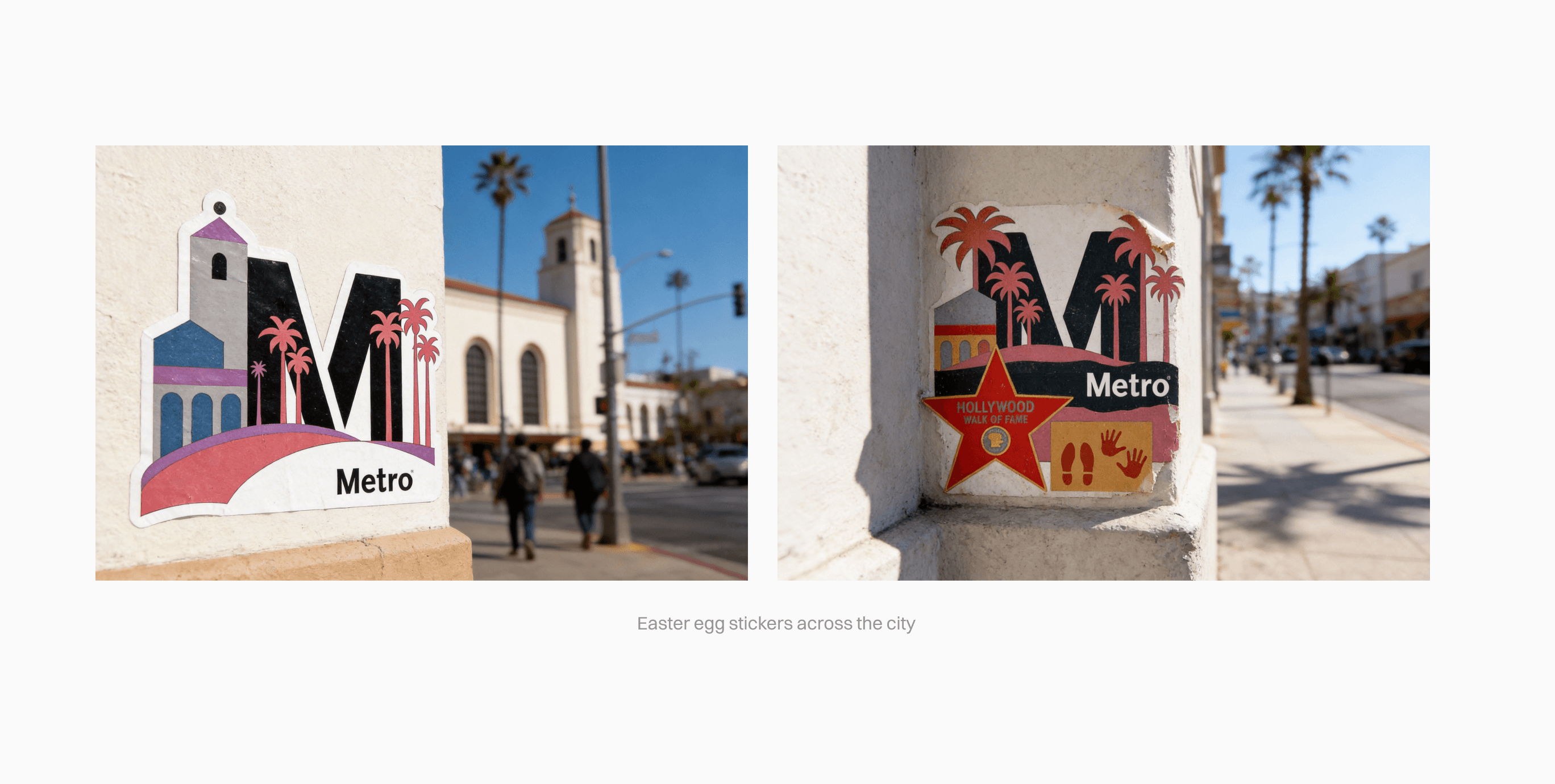
From our field studies across 20+ stations, we knew fans wanted more than just a ride; they wanted to understand where the energy was happening and how to safely bridge the gap between physical proximity and social connection. This research guided our selection of signature touchpoints to develop into a cohesive service blueprint:
Next Steps
What I'd do next
Enhance UI Interaction & Readability
Juggling the complexity of both hardware and software limited the time I had to perfect every digital touchpoint. If I revisit this project, I’d focus on refining the dynamic visuals—like the Olympin badges and glow animations—to ensure they provide clear way finding and delight for non-local users.
Deepen Business & Marketing Integration
To make Olympin a reality, it needs to live within the larger city ecosystem. I would focus on aligning our product touch points—like the pins, maps, and event prompts—with LA Metro’s official Olympic campaign timeline.
Develop a Cohesive Brand System
A great product means nothing if it doesn't feel like it belongs in the city. My next priority would be applying our new design tone across all UI, station signage, and campaign assets.
My Takeaways
What I learned from Olympin.
Prioritize user value and needs to align with brand
I learned to view the physical device, digital interface, and brand narrative as a single, holistic experience rather than separate deliverables. This project challenged me to think beyond UI/UX and adopt a product mindset—ensuring that the hardware and software work in harmony to solve a social problem.
Efficient way to connect people
The Metro was built for efficiency, but it lacks "social soul". This project reminded me that designing for humans starts with honoring the need for belonging. By focusing on social comfort and serendipity, I learned that a product’s value isn't just in what it does, but in how it makes people feel present and connected.
Back
Let’s stay in touch
Resume
My resume.pdf