Insight 01
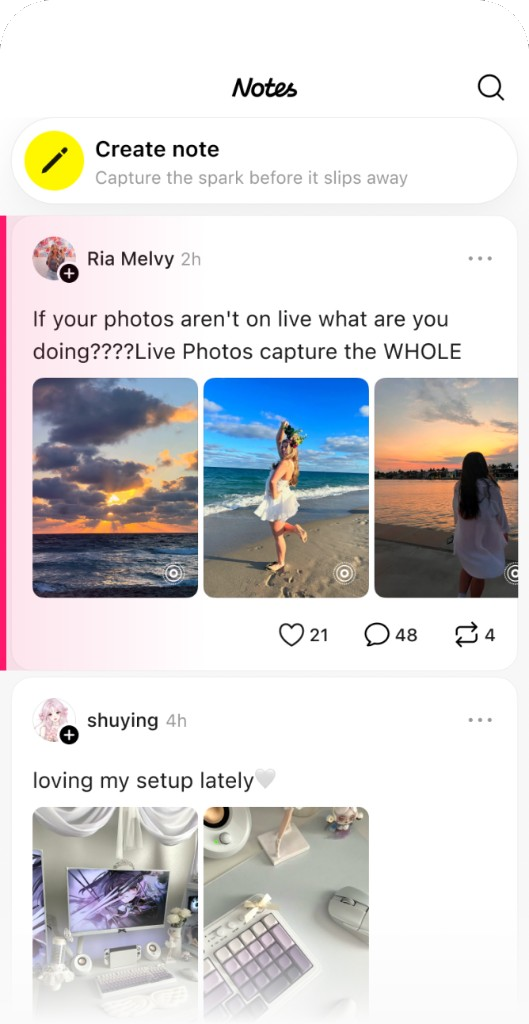
Screen density limited content exposure.
At 1.5–2.5 notes per screen, each user gets very few chances to capture interest before giving up and scrolling down.

Internship · Shipped Q3 2025
Transforming browsing experience around density and hierarchy, shipping lifts in impressions, interactions, and account follows.
Product Designer
Aug - Sep 2025
Software Engineer
Product Manager
Data Scientist
iOS, Android
Within the app, there’s a feature named Notes: a space for low-effort, everyday sharing, opening content creation beyond creators to everyday users.
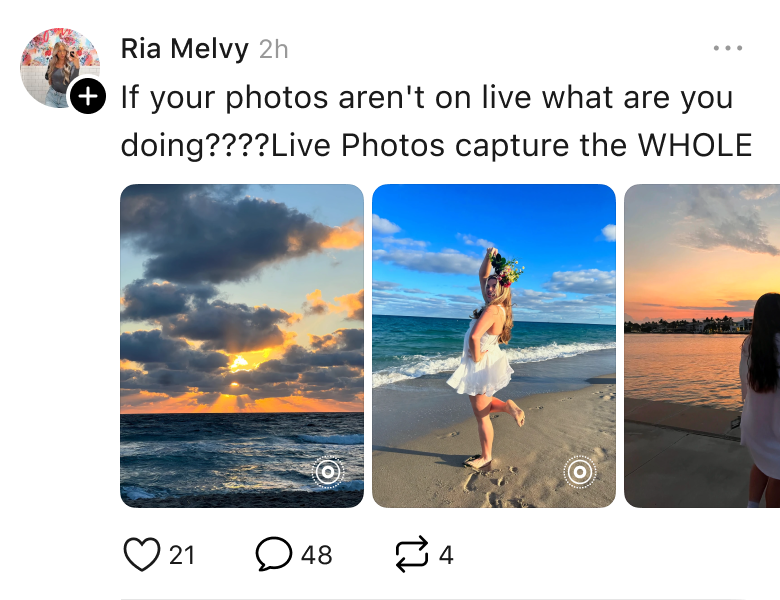
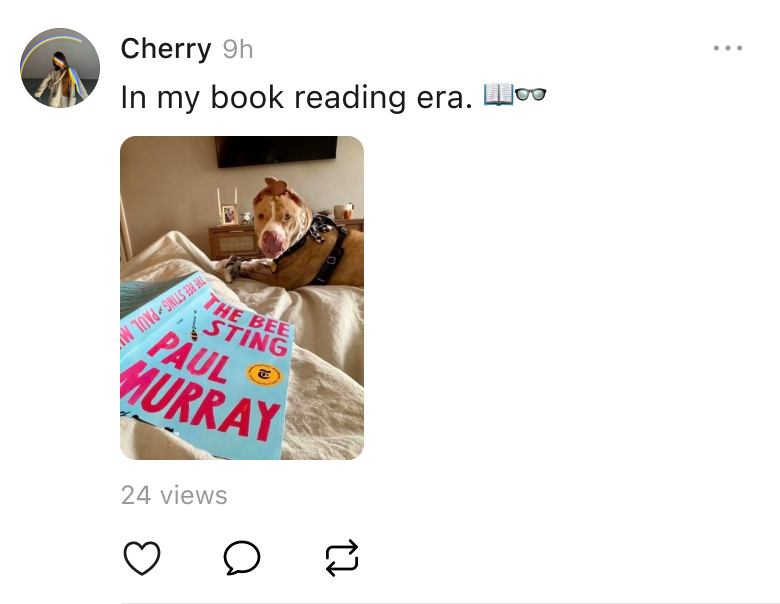
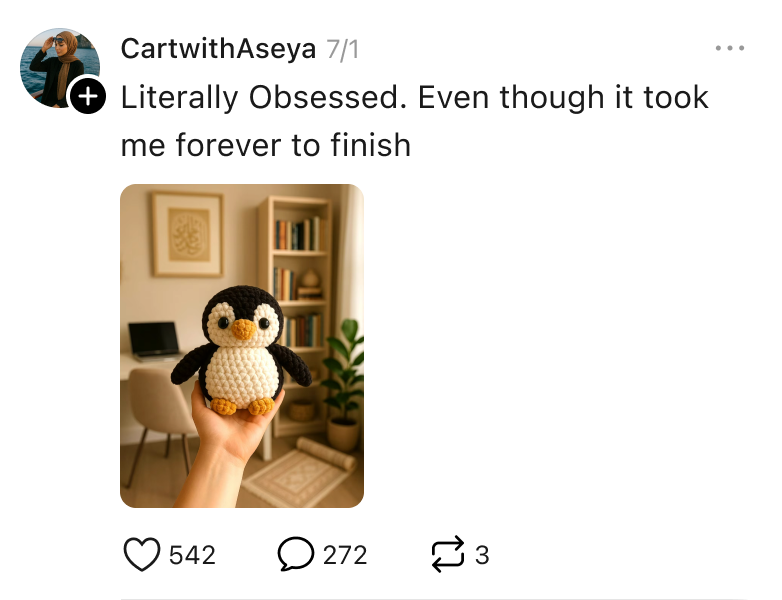
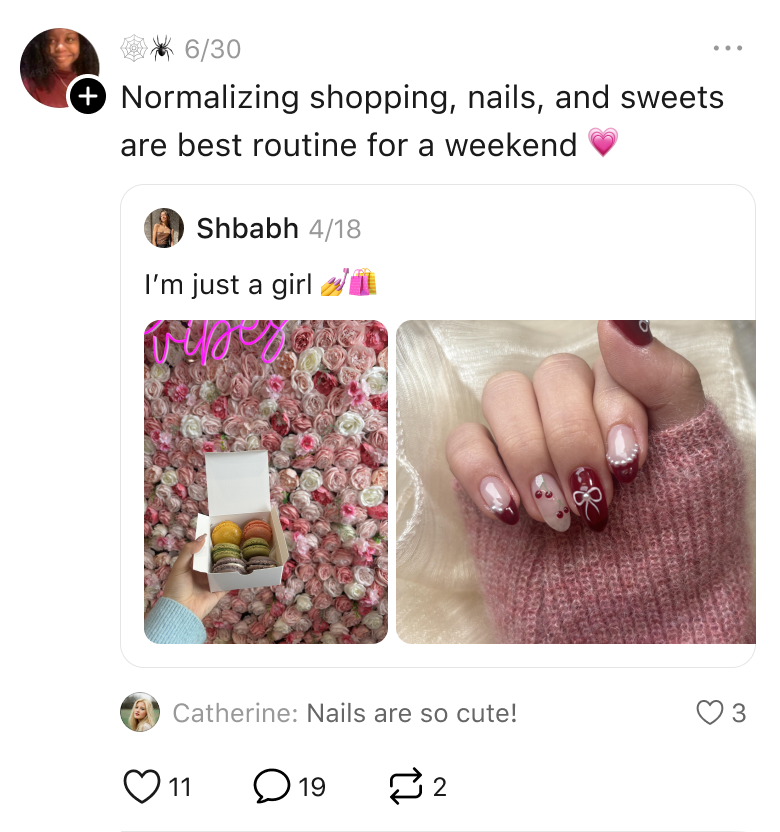
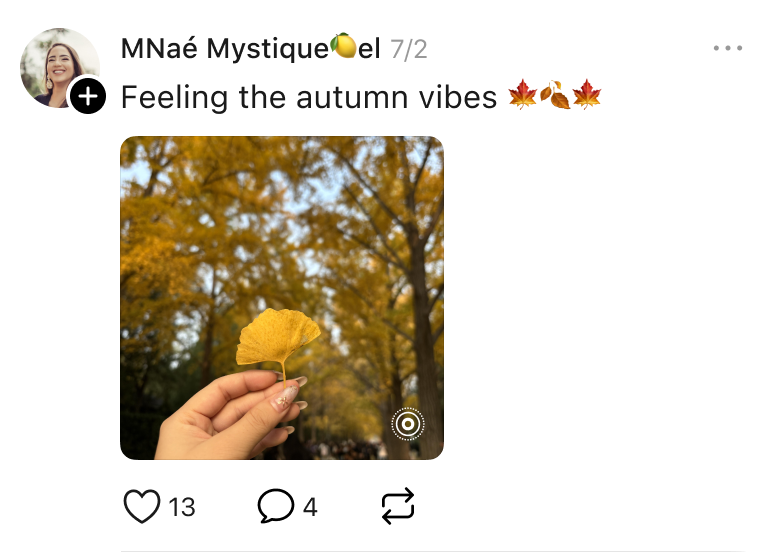
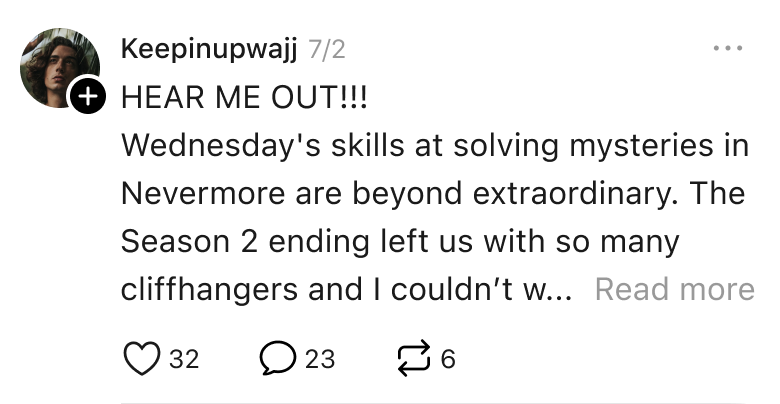
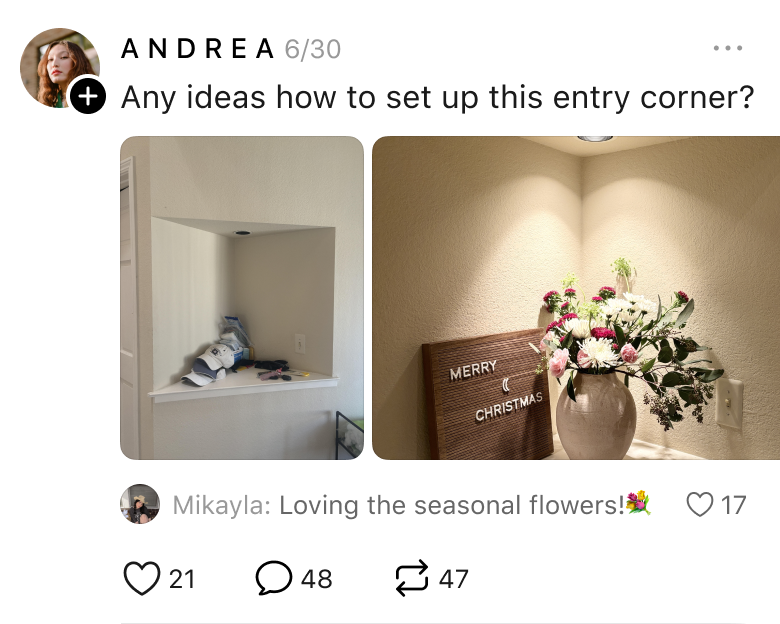
Switching to Notes Tab
Scroll down to view more notes

When the first few notes don't resonates, the interest is missed early, retention and scroll depth decline fast...
Good information hierarchy isn't about making everything stand out, it's about letting users see what interests them faster.
Insight 01
At 1.5–2.5 notes per screen, each user gets very few chances to capture interest before giving up and scrolling down.
Insight 02
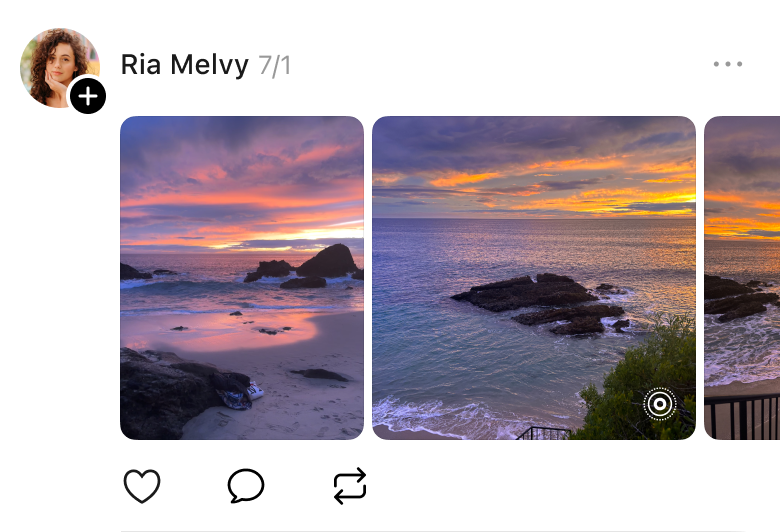
From viewer pov, the who took a full line. The what had to wait.
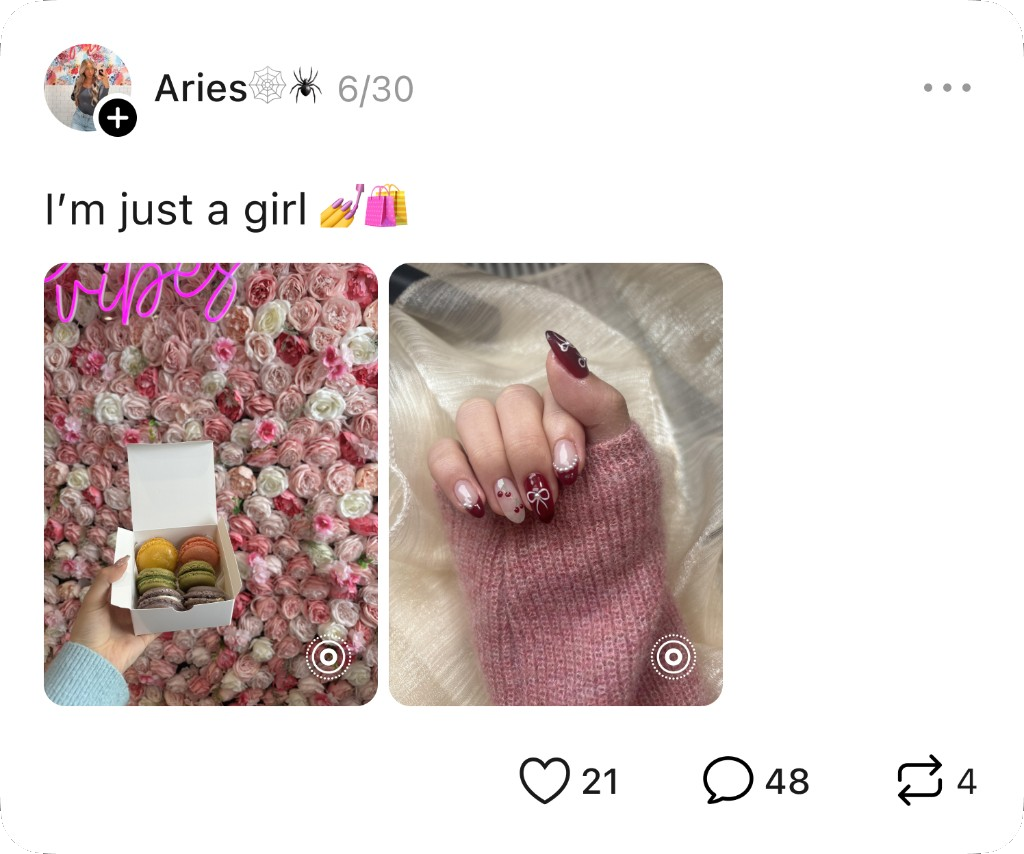
Both insights pointed at the same root cause — the layout hadn't decided what mattered. Every change below follows from fixing that order.
The image and caption move to the top of the card, taking the space identity used to hold. Nothing is removed — the order changes, so what stops a scroll arrives first.
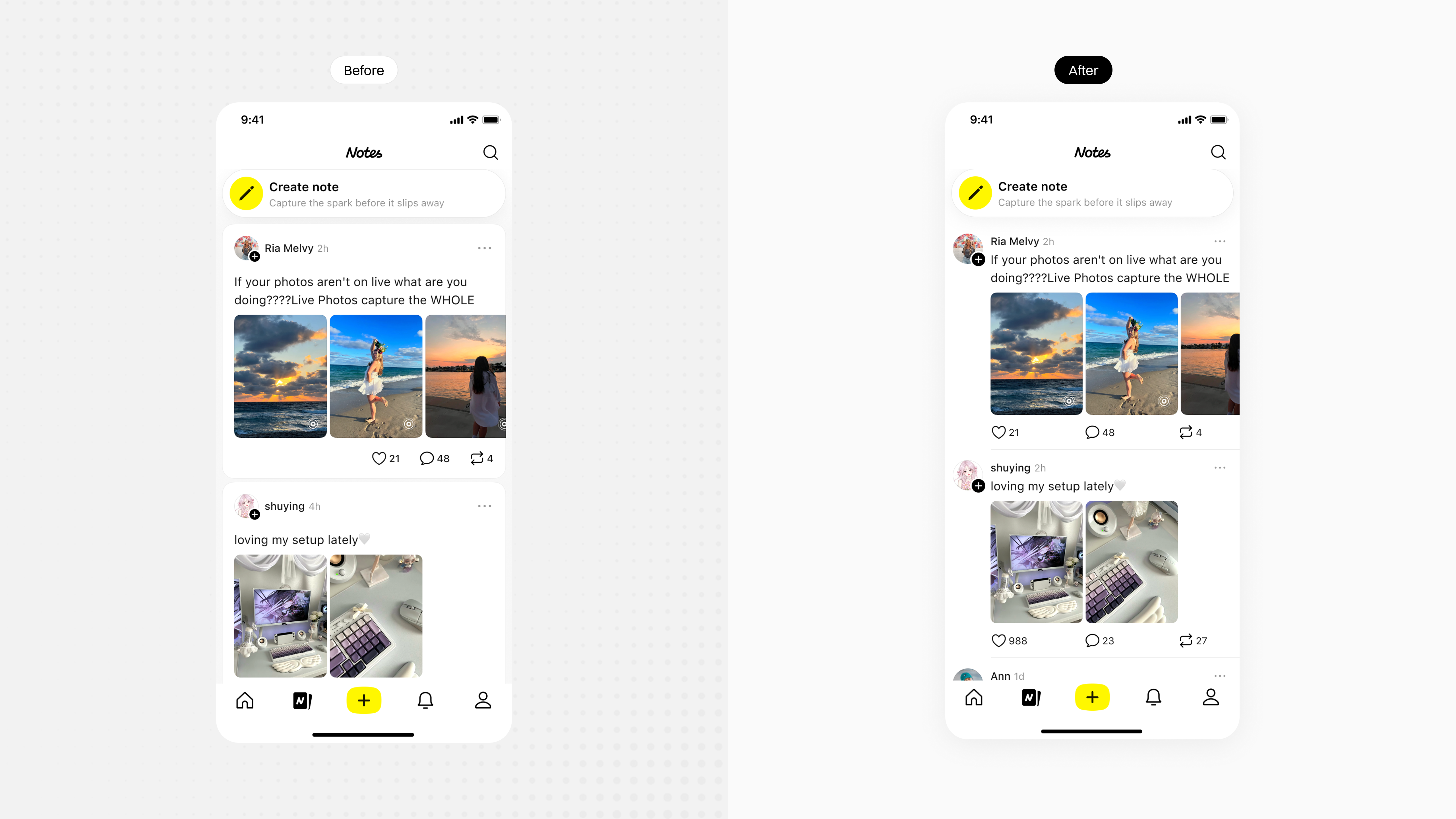
Tightening spacing between username, caption, and media raised notes per screen from ~1.8 to ~2.2. Each additional note is another chance for something to land before a user leaves.
The constraint was readability: past a certain point, denser stops meaning more seen and starts meaning nothing read.
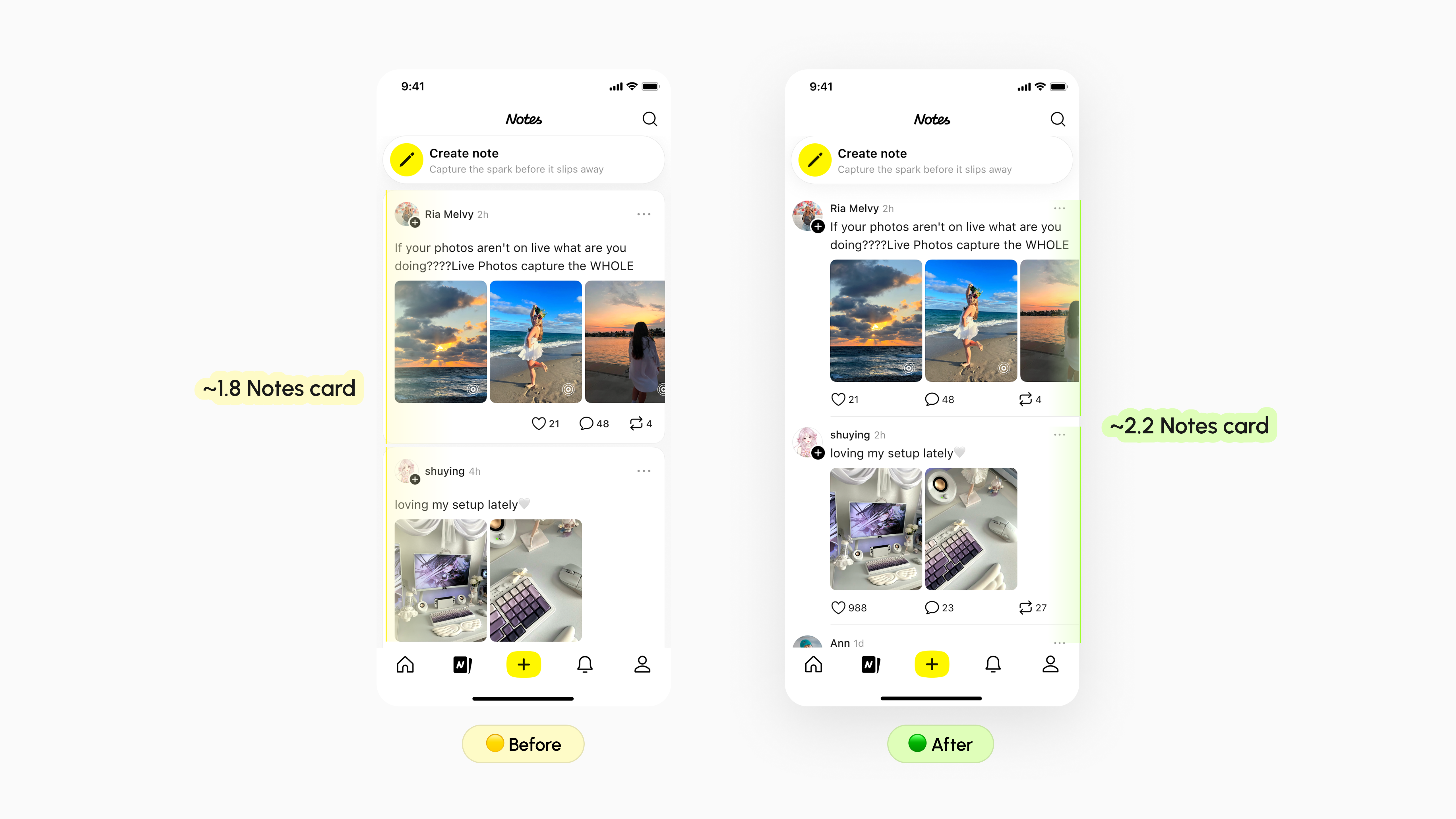
Identity doesn't disappear — it surfaces once a user has engaged with the content, so recognition feels earned rather than announced. Follow rate rose 5.1%.
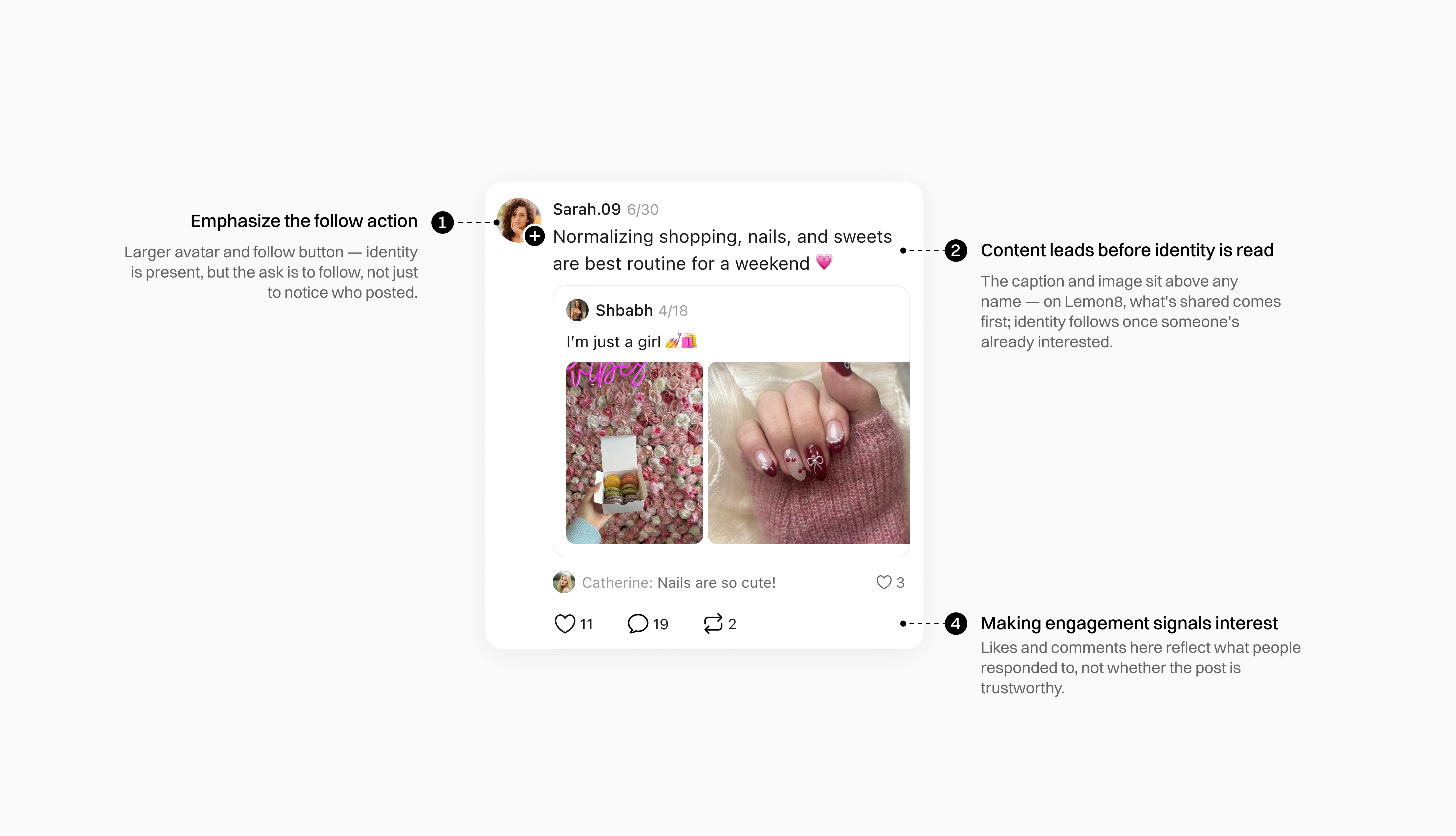
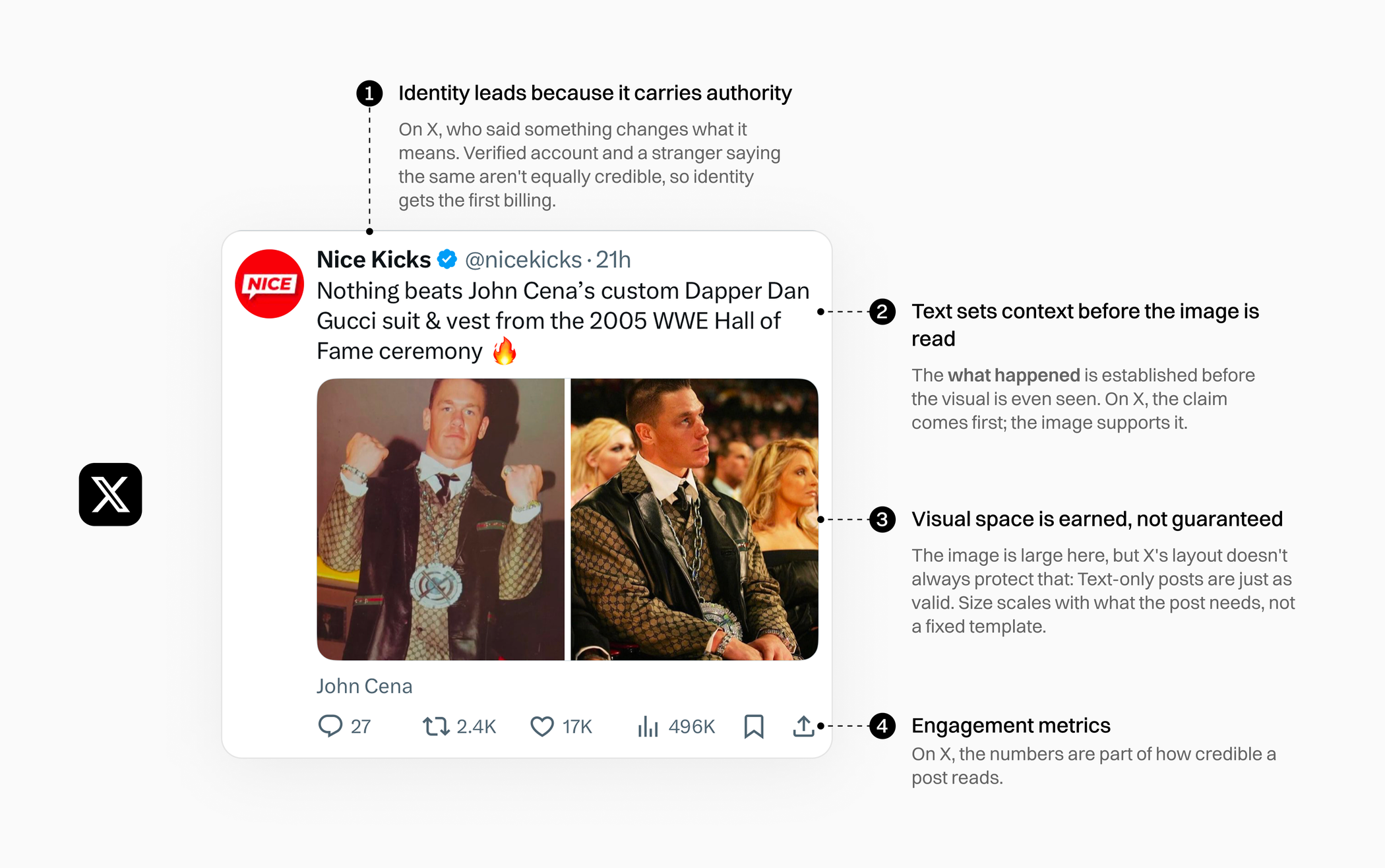
I looked at how leading platforms structure their feeds, not just for layout patterns but for what each was optimizing to prioritize.
Groups 01
What's said matters more than who said it
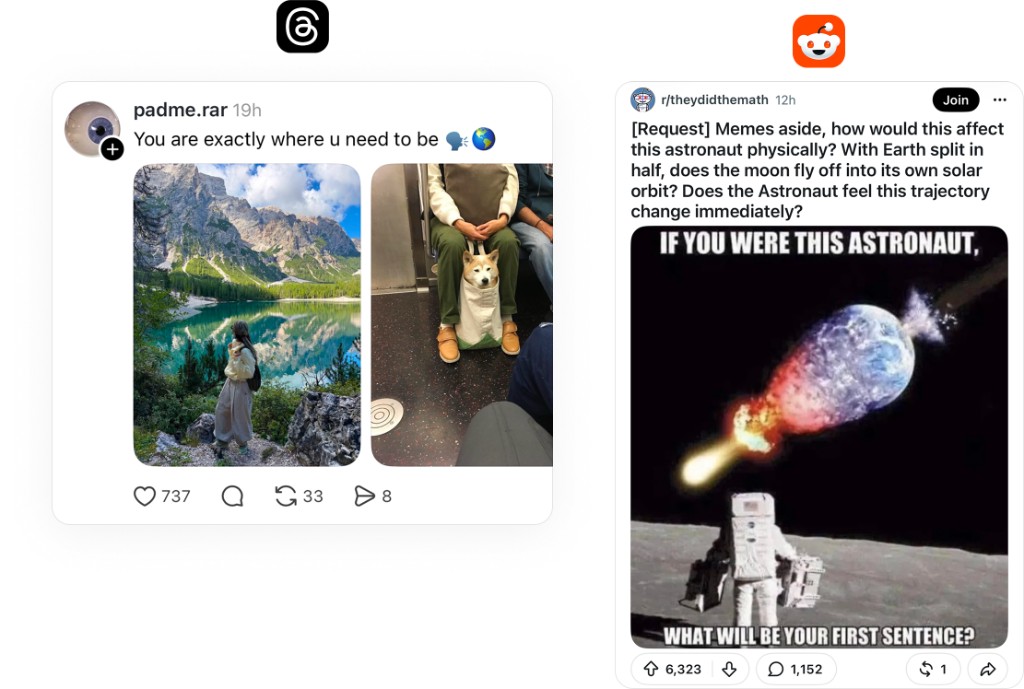
Groups 02
Who said it shapes how it reads
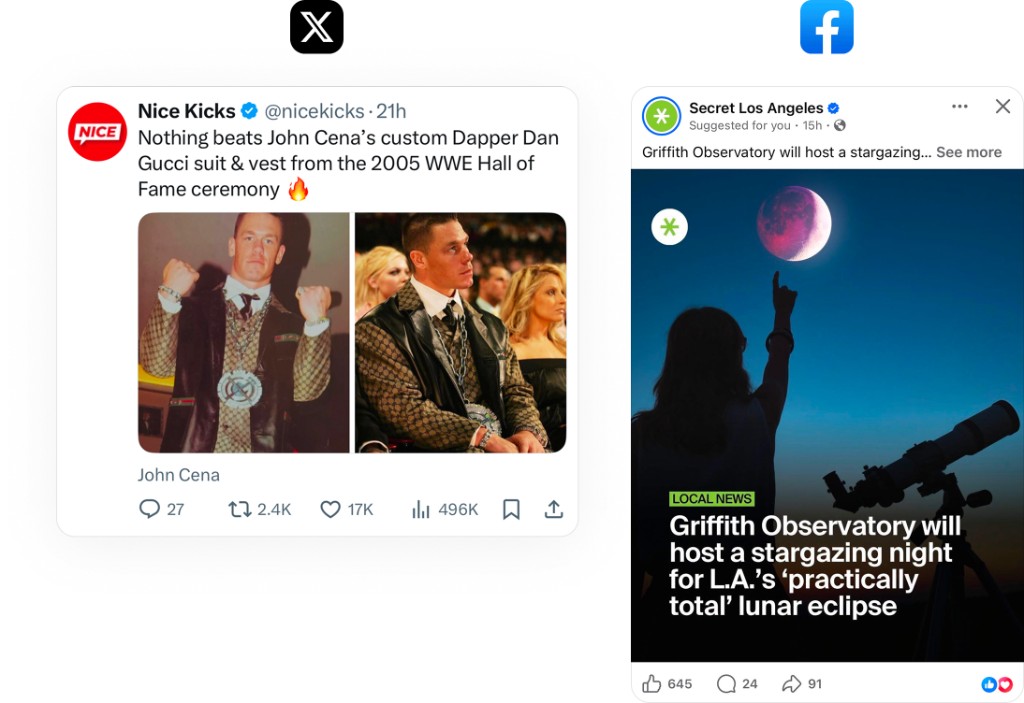
The rest of this project is password protected. Reach out to for details.The rest of this project is password protected
Reach out to for details.
Impact
+0.00%
Impressions per user
+0.0%
Accounts followed
+0.0%
Likes
+0.0%
Comments
I came in with 8+ things to improve. Most were real problems, but only a few would move what Notes was measured on. Sorting them against product goals meant dropping ideas I liked.
Density costs readability. Moving identity later costs immediate recognition. The work wasn't avoiding those trade-offs — it was choosing which one to accept, and defending it.
Density isn't just px gaps— quotes, reposts, and multi-image notes all size differently. I built those variants in Figma. AI could generate them from a matrix and stress-test the string limits before handoff.

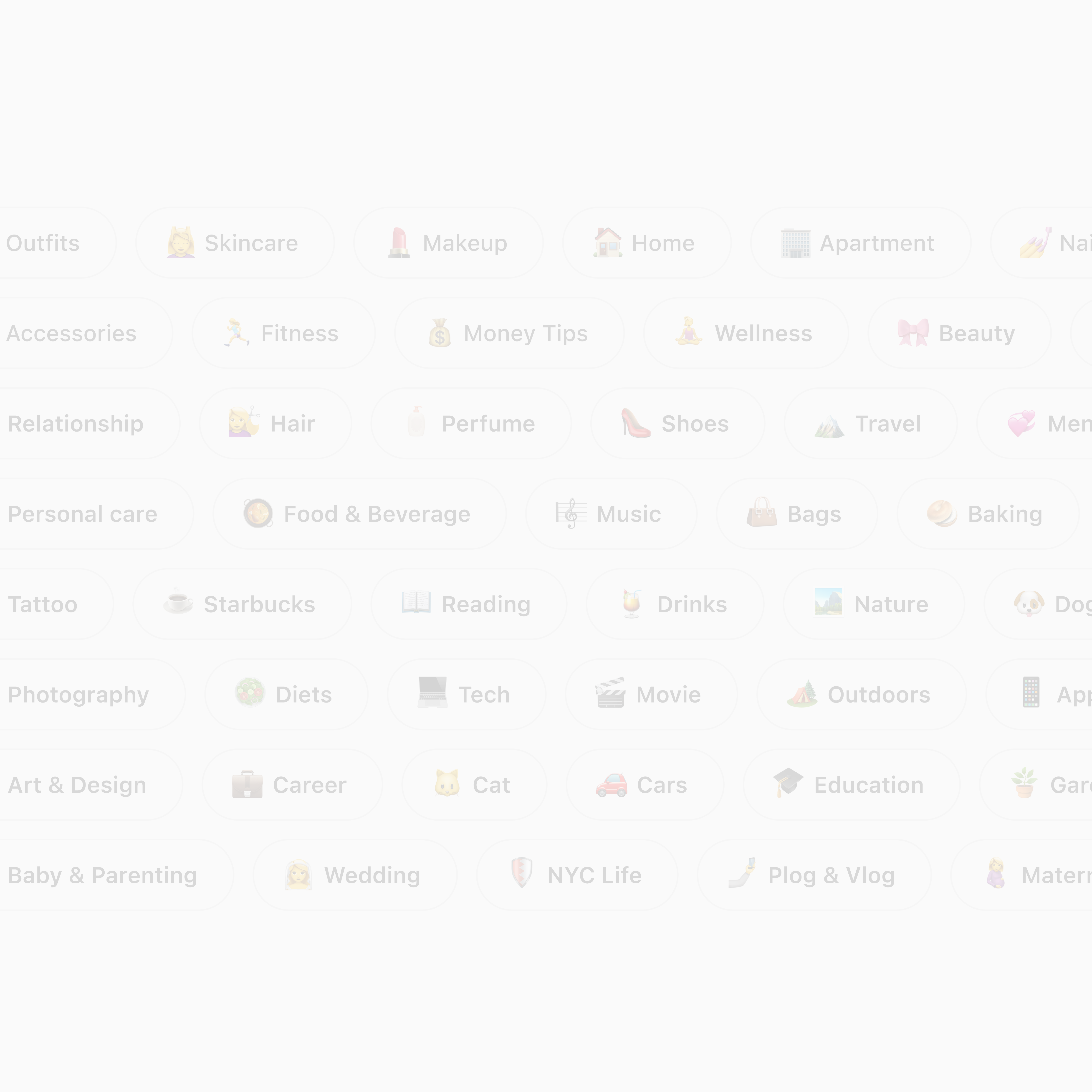
Users skip interest questions at signup, so the feed starts generic. We ask again in-feed, once the payoff is easier to see — and the feed gets sharper from there.

Users often screenshot content just to search it elsewhere. I brainstormed how to bring the search in-app: hold a card for similar results, or screenshot page to trigger search image.
Back